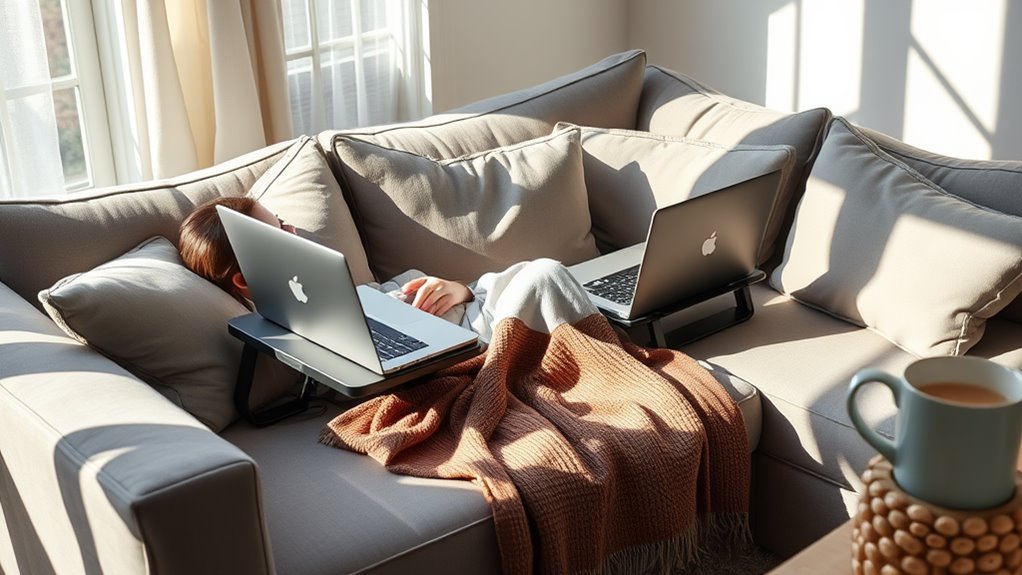
To work comfortably from a couch or bed without hurting your back, assess your setup first. Use firm cushions for support and keep your screen at eye level with a lap desk. Maintain proper posture by keeping your feet flat and elbows at a 90-degree angle. Don't forget to take regular breaks and stretch to relieve tension. By following these tips, you'll create a more ergonomic workspace, allowing for better comfort and productivity. You'll discover additional insights to optimize your setup.
Nomad Highlights
- Use a lap desk to elevate your laptop to eye level, preventing neck strain while working from a couch or bed.
- Incorporate supportive cushions like memory foam to maintain proper posture and provide back support while seated.
- Keep your feet flat on the ground or a cushion to promote a stable base and reduce pressure on your lower back.
- Take frequent breaks every 30 to 60 minutes to stretch and reset your posture, improving overall comfort and reducing fatigue.
- Regularly assess your body alignment and make adjustments to your setup to ensure long-term ergonomic benefits while working.
Assess Your Workspace Setup
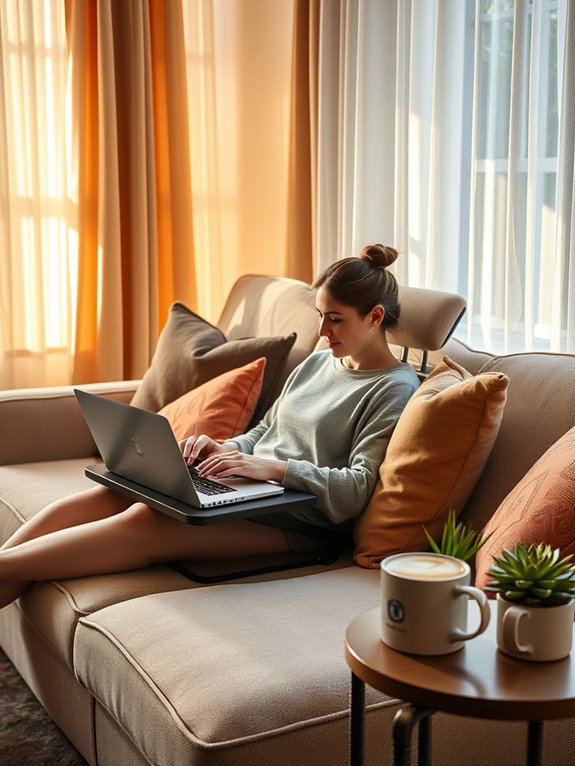
Before you settle in with your laptop, take a moment to assess your workspace setup. First, check the lighting; make certain it's bright enough to avoid straining your eyes. Position your laptop at eye level, ideally using a lap desk or a stack of books, so you aren't hunching over. Next, evaluate your seating arrangement. If you're on the couch, make sure you've got adequate back support. If you're in bed, propping yourself up with pillows can help maintain good posture. Incorporating an ergonomic design can further enhance your comfort, reducing the risk of strain during long working hours. A good ergonomic wrist rest, like the Logitech MX Palm Rest, can provide additional support while typing, further reducing discomfort. Additionally, consider using an adjustable footrest to promote circulation and improve posture while you work. Using a lumbar support cushion can also help alleviate lower back pain, especially during extended periods of sitting. Adding ankle resistance bands to your routine can also improve overall body strength and stability, which contributes to better posture while working.
Keep your work materials organized and within reach to minimize awkward stretching. Finally, consider the noise level in your space; a quiet environment boosts focus and productivity. Balancing comfort and functionality is key to working effectively from these cozy spots.
Choose the Right Cushions and Support
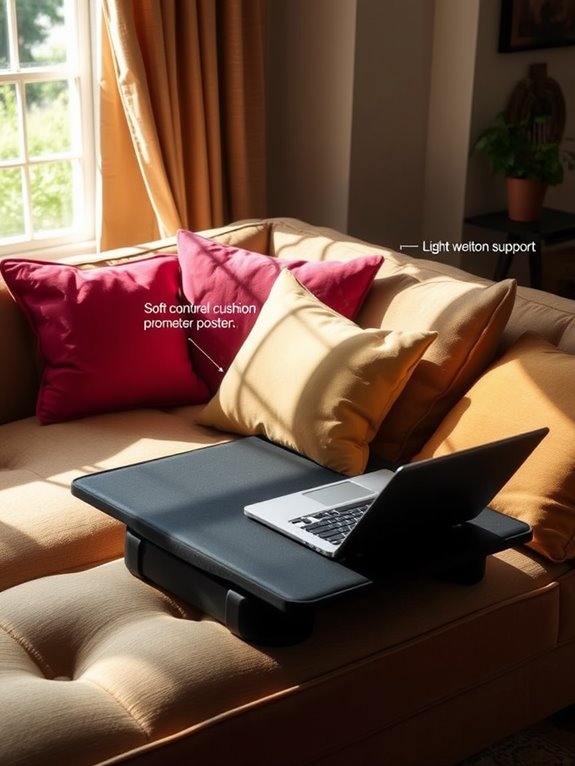
To work comfortably from your couch or bed, choosing the right cushions is essential. Look for materials that offer both softness and support, so you can maintain a good posture while you work. Additionally, positioning your cushions strategically can make a big difference in how comfortable you feel throughout the day. Consider utilizing collaboration tools that enhance your workflow and reduce the strain of multitasking. Using ergonomic designs in your workspace can also help prevent discomfort and promote better posture, ensuring you stay comfortable during long working hours. Incorporating compact foam rollers into your routine can provide additional muscle relief, enhancing your overall comfort while working in these positions. Choosing adjustable features in your workspace setup, such as lumbar support and seat height, can further improve your posture and comfort during prolonged sitting. Selecting high-quality cushions filled with buckwheat hulls can offer adjustable firmness that enhances your support while working.
Cushion Types and Materials
Choosing the right cushions and support is essential for working comfortably from a couch or bed.
Start with a firmer cushion, like memory foam, which provides both comfort and adequate support for your back. Look for cushions with a good density to prevent sinking too deeply, as this can lead to poor posture. Adjustable dumbbells, such as those with a wide weight range, can also help maintain strength and posture while working in a seated position. A well-positioned cushion can enhance your insulation quality, ensuring that you remain comfortable for longer periods. Additionally, using an ergonomic design can significantly improve your comfort and reduce strain on your body. Incorporating height adjustability in your workspace setup can further enhance your comfort while working from unconventional seating.
If you prefer softer materials, opt for a plush, yet supportive option, such as polyester or a blended fabric.
Don't forget about lumbar support; a small cushion or roll can work wonders for your lower back. Experiment with different types to find what feels best for you. Additionally, ensure your workspace is organized and clutter-free to enhance your comfort and productivity, as a systematic meal planning approach can foster a more efficient environment.
Supportive Positioning Techniques
Finding the right positioning techniques can make all the difference when working from a couch or bed. Start by choosing supportive cushions that maintain your spine's natural curve. A lumbar pillow can offer essential back support, while a seat cushion helps distribute weight evenly.
If you're lying down, try propping yourself up with a wedge pillow to reduce strain on your neck and back. Always keep your knees elevated with a cushion or blanket to relieve pressure on your lower back.
Adjust your laptop or device to eye level, using a lap desk if necessary, to avoid straining your neck. Remember, comfort is key, so take time to find the right combination of cushions that work for you and your workspace. Incorporating user-friendly features into your workspace can also enhance your overall comfort while working remotely.
Maintain Proper Posture
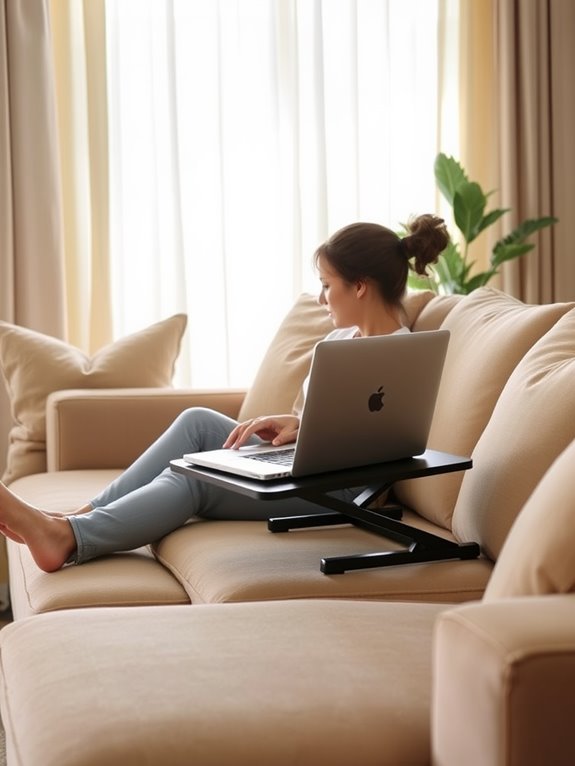
Here are some tips to help you sit or lie comfortably without straining your back:
- Keep your back straight and shoulders relaxed.
- Position your feet flat on the floor or supported on a cushion.
- Use a small pillow or cushion to support your lower back.
- Hold your device at eye level to avoid neck strain.
- Take regular breaks to stretch and move around. Incorporating compact foam rollers into your routine can also help improve your core strength, which supports better posture while working from a couch or bed. Utilizing resistance bands can also enhance your overall fitness, contributing to a stronger core and better stability during prolonged sitting or lying down. Regular use of acupressure mats can also promote relaxation and alleviate muscle tension, making it easier to maintain comfort during long work sessions. Incorporating balance boards into your routine can also help improve your core strength, which supports better posture while working from a couch or bed.
Use a Lap Desk for Stability

A lap desk can transform your couch or bed into a stable workspace, making it easier to focus on your tasks. It provides a flat surface for your laptop, notes, or other materials, helping you avoid the awkwardness of balancing everything on your lap. Look for a lap desk that's lightweight and portable, so you can easily move it around your home. Some models even come with cushioned bottoms for added comfort, reducing pressure on your legs. Additionally, a lap desk can help keep your screen at eye level, promoting better posture. This simple tool can enhance your productivity while ensuring you stay comfortable, allowing you to work efficiently without straining your back. Investing in a lap desk with adjustable height options can further improve your ergonomics and comfort. Furthermore, a well-designed lap desk often incorporates cooling and ventilation aspects, which helps maintain optimal laptop performance by preventing overheating. Moreover, using a lap desk that features stability and grip will ensure your devices remain secure while you work. Many adjustable tablet stands also offer multiple height configurations, which can complement your lap desk setup for even better ergonomics. Additionally, many portable standing desk converters provide ergonomic benefits by allowing users to adjust their working height to reduce strain on the back and neck.
Take Regular Breaks and Stretch
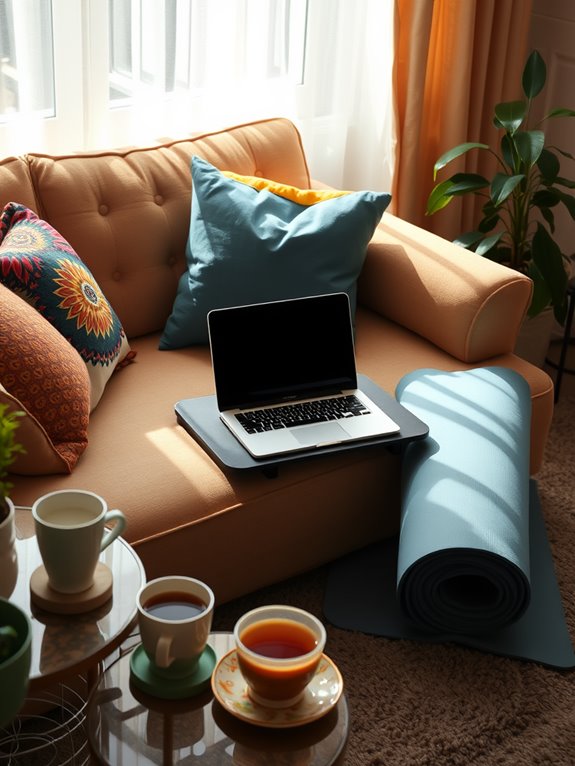
When you're working from a couch or bed, it's easy to forget to move. Taking regular breaks and stretching can boost your energy and keep you comfortable. Set a timer to remind yourself to step away and get your body moving throughout the day. Incorporating detailed sleep analysis into your routine can also help you identify how rest affects your productivity and overall well-being. Regular breaks can improve emotional regulation, allowing you to return to your tasks with a clearer mind and renewed focus. Engaging in activities like coloring can also provide stress relief benefits, making it an excellent addition to your break routine. Additionally, using sleep aromatherapy sprays can create a calming environment that enhances relaxation and promotes better focus during work sessions. Engaging in mindfulness practices such as coloring can further enhance your ability to unwind during breaks.
Importance of Frequent Movement
Staying glued to your couch or bed for hours can feel tempting, but it's crucial to break that habit. Frequent movement helps maintain your physical health and boosts productivity.
Here are some reasons to get up and move around regularly:
- Reduces muscle stiffness and tension.
- Improves blood circulation, keeping you energized.
- Enhances concentration and mental clarity.
- Prevents fatigue and promotes better posture.
- Supports overall well-being by reducing stress.
- Incorporating balance exercises into your routine can further enhance your stability and overall fitness. Additionally, using resistance bands for quick workouts can be a convenient way to stay active while working from home. Resistance bands are also effective for strength training, allowing you to target various muscle groups without needing heavy weights.
Interestingly, incorporating guilt-free snacking into your breaks can also keep your energy levels up throughout the day. Using reusable snack bags for your snacks can help you stay eco-friendly while enjoying your treats.
Try to set a timer for every 30-60 minutes to remind yourself to stand up, walk around, or do a quick activity.
Incorporating these breaks into your routine not only protects your back but also keeps you engaged and focused throughout the day.
Simple Stretching Exercises
Incorporating simple stretching exercises into your routine not only helps alleviate tension but also revitalizes your body and mind. Taking a few minutes to stretch can boost your focus and energy levels, making your work sessions more productive. Here are some easy stretches to try:
| Stretch | Duration | Benefits |
|---|---|---|
| Neck Stretch | 15 seconds | Relieves neck tension |
| Shoulder Shrug | 15 seconds | Eases shoulder tightness |
| Seated Torso Twist | 30 seconds | Improves spine mobility |
| Wrist Stretch | 15 seconds | Reduces wrist strain |
| Forward Bend | 30 seconds | Stretches back and legs |
Make these stretches a habit, and you'll notice a significant difference in how you feel during your workday!
Setting a Timer
To maintain focus and prevent fatigue while working from a couch or bed, setting a timer can be incredibly helpful. This practice encourages you to take regular breaks, which is essential for your physical and mental well-being.
Here's how to make the most of your breaks:
- Stretch your back to relieve tension.
- Walk around to get your blood flowing.
- Hydrate with a glass of water.
- Practice deep breathing to reduce stress.
- Change your position to avoid stiffness.
Keep Your Screen at Eye Level
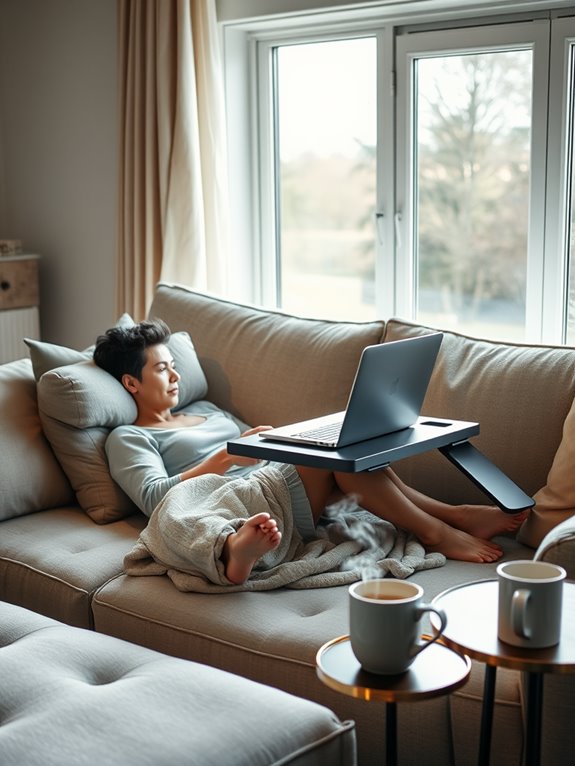
One key element to working comfortably from a couch or bed is keeping your screen at eye level. When your screen's positioned correctly, you reduce strain on your neck and back.
If you're using a laptop, consider propping it up with pillows or a portable stand. This way, your eyes align with the top third of the screen, allowing for a natural gaze.
If you're using a tablet or phone, try using a stand to maintain that eye level. Avoid hunching over or looking down, as this can lead to discomfort over time.
Adjust Your Keyboard and Mouse Position
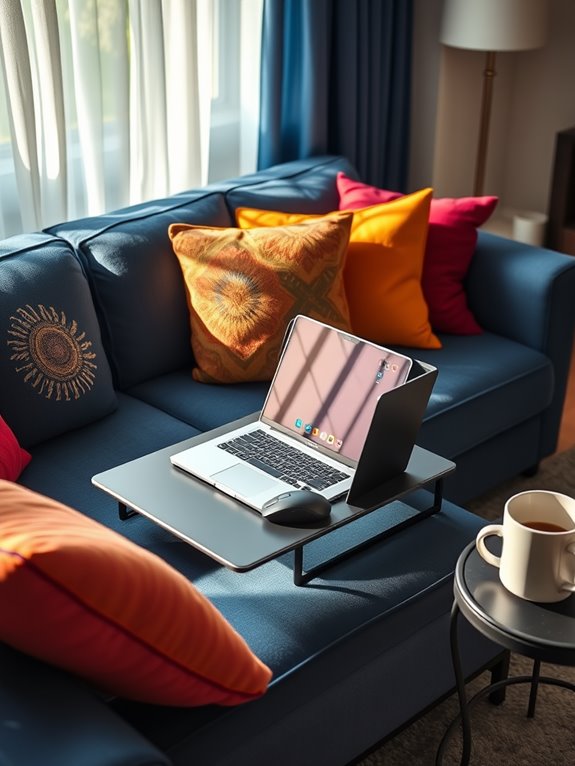
Properly positioning your keyboard and mouse is essential for a comfortable work setup on the couch or bed. Keeping them at the right height and distance not only improves your posture but also minimizes strain on your wrists and shoulders.
Here are some tips to help you adjust their position:
- Use a lap desk to provide a stable surface for your keyboard and mouse.
- Keep your elbows at a 90-degree angle to maintain neutral wrist alignment.
- Position your mouse close to the keyboard to avoid overreaching.
- Ensure your wrists are straight and not resting on hard surfaces while typing.
- Experiment with different positions until you find what feels comfortable for you.
Establish a Routine for Ergonomic Practices

Establishing a routine for ergonomic practices can greatly enhance your comfort while working from a couch or bed.
Start your day by setting up your workspace with the right posture in mind. Use cushions to support your back and keep your feet flat on the floor or a footrest. Schedule regular breaks every 30 to 60 minutes to stretch and move around.
Adjust your screen to eye level to prevent neck strain, and position your keyboard and mouse at a comfortable height. Remember to switch positions throughout the day to avoid stiffness.
Finally, incorporate mindfulness practices to stay aware of your body's alignment. Consistency in these routines will help you maintain comfort and prevent discomfort in the long run.
Frequently Asked Questions
How Can I Minimize Distractions While Working From Home?
To minimize distractions while working from home, create a dedicated workspace, set clear boundaries with others, use noise-canceling headphones, and establish a routine. These steps help you maintain focus and boost productivity throughout your day.
What Type of Blanket Is Best for Added Comfort?
You might find yourself wrapped in a soft, plush blanket while dreaming of comfort. Fleece or weighted blankets are great choices; they offer warmth and coziness, making your work hours feel more enjoyable and less distracting.
Are There Specific Exercises to Strengthen My Back?
Yes, there are specific exercises to strengthen your back. Incorporate planks, bridges, and bird-dogs into your routine. These movements engage core muscles and promote stability, helping you maintain a healthy back as you work.
How Do I Maintain Focus During Long Work Hours?
Studies show that taking short breaks every 25 minutes boosts focus. To maintain your concentration during long hours, set a timer, stretch, hydrate, and switch tasks occasionally. This keeps your mind fresh and engaged.
What Are the Best Materials for a Portable Lap Desk?
For a portable lap desk, look for lightweight materials like bamboo or plastic. Make certain it has a smooth surface and includes cushioning for comfort. These materials help keep your workspace functional and easy to transport.
Conclusion
By following these tips, you can turn your couch or bed into a cozy yet ergonomic workspace. Picture yourself nestled in your favorite spot, a cushion behind your lower back, and your laptop balanced on a sturdy lap desk. As you stretch and take breaks, you feel relaxed and energized, ready to tackle your tasks. With a little attention to your setup, you'll enjoy the comfort of home without sacrificing your back health.