In just five minutes, you can enhance your desk routine with quick workouts to reduce stiffness and boost your fitness. Start with warm-ups like neck rolls and shoulder shrugs. Try seated leg extensions and desk shoulder rolls to get your blood flowing. Incorporate standing calf raises and wrist stretches to keep your muscles engaged. Finish with deep breathing to relax and recharge. If you want to explore more effective exercises and tips for staying active, keep going!
Nomad Highlights
- Incorporate quick warm-up exercises like neck rolls and shoulder shrugs to alleviate tension and enhance blood circulation.
- Perform seated leg extensions to keep legs active and strengthen thigh muscles while seated.
- Include desk shoulder rolls to relieve upper body tension and improve mobility throughout the workday.
- Try standing calf raises to strengthen calves and boost blood flow; use your desk for balance.
- Integrate wrist and finger stretches to combat stiffness from typing and enhance overall flexibility.
The Importance of Movement During Work Hours
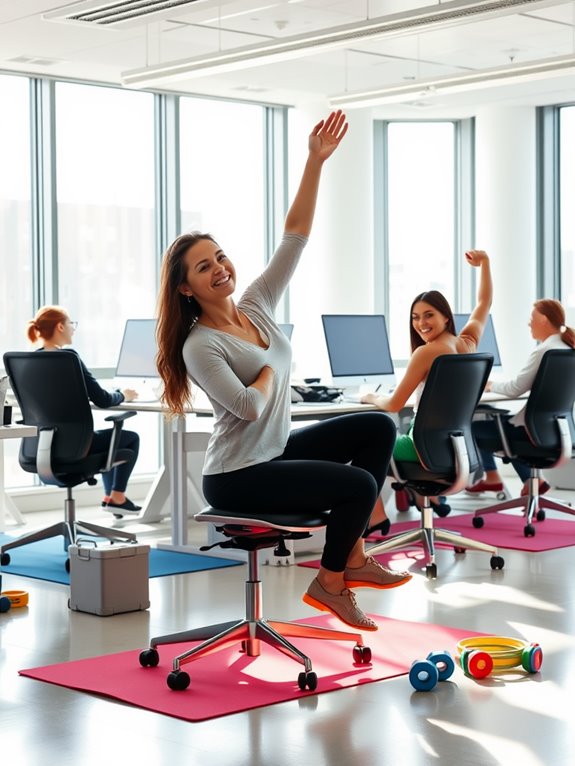
While you might think sitting at your desk all day is simply part of the job, incorporating movement into your work hours is essential for maintaining your health and productivity.
Regular movement helps increase blood circulation, which keeps your energy levels up and enhances your focus. When you're active, you reduce the risk of developing stiffness or long-term musculoskeletal issues. Engaging in activities that improve core strength can further alleviate discomfort from prolonged sitting. Additionally, using resistance bands can provide a versatile way to incorporate strength training exercises into your day. These bands are made from high-quality silicone or latex, ensuring durability and effective resistance for various workouts.
Even small adjustments, like standing while you talk on the phone or taking short breaks to walk around, can make a significant difference. By prioritizing movement, you not only improve your physical well-being but also boost your mental clarity. Additionally, incorporating adjustable dumbbells into your routine can further enhance your workout efficiency during breaks.
Quick Warm-Up Exercises
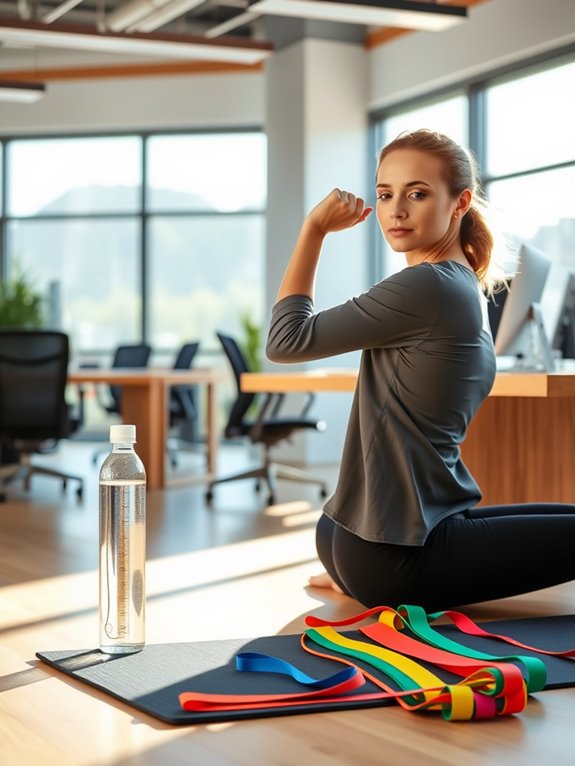
In just five minutes, you can perform quick warm-up exercises that will prepare your body for a day of desk work.
Start with neck rolls, gently easing tension by rotating your head in circles. Next, do shoulder shrugs, lifting your shoulders toward your ears and releasing. Incorporating ergonomic designs into your workspace can also further enhance your comfort during these exercises. Using adjustable phone stands can support your device at the ideal height for these movements. Additionally, consider using a compact foam roller to provide targeted relief for sore muscles after your desk work. Furthermore, integrating height adjustment options can help tailor your workspace to your specific needs, promoting better posture during these activities.
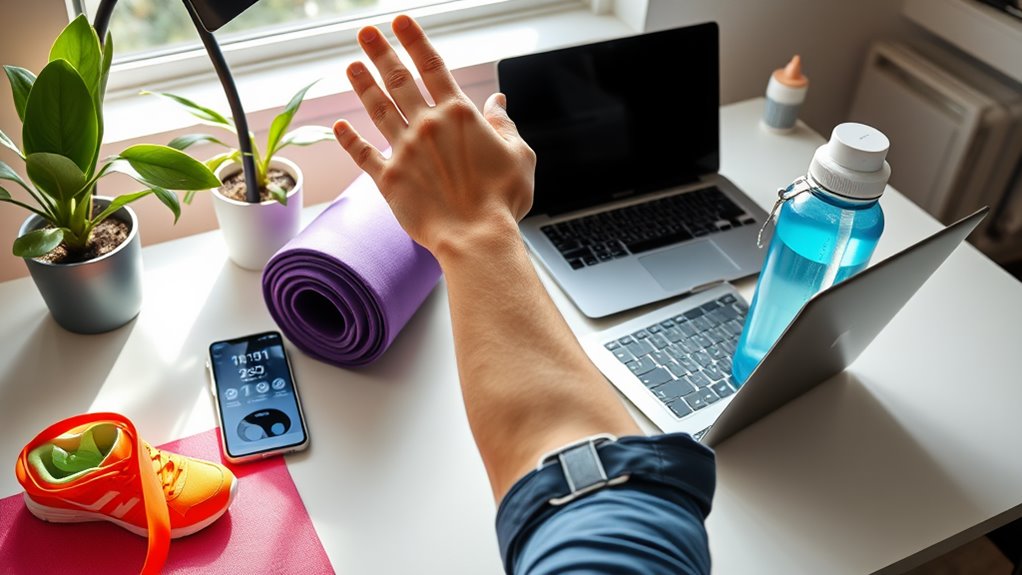
Follow this with some arm circles; extend your arms and make small, then larger circles to get your blood flowing. Incorporate wrist rotations to loosen up your hands, which often bear the brunt of typing.
Finally, finish with a few torso twists, standing up if possible, to stretch your back. These quick movements'll increase circulation and help prevent stiffness, allowing you to stay focused and energized throughout the day. Additionally, consider using adjustable tablet stands to maintain ergonomic comfort while working at your desk.
Seated Leg Extensions
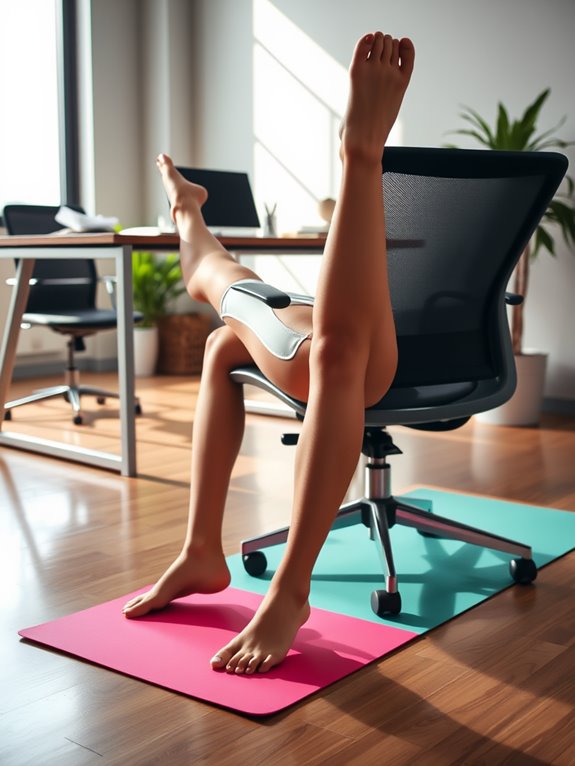
Seated leg extensions are a simple yet effective way to keep your legs active during long hours at your desk. This exercise boosts circulation and strengthens your thigh muscles without needing to leave your chair. To perform seated leg extensions, sit up straight with your feet flat on the floor. Slowly extend one leg until it's parallel to the ground, hold for a few seconds, then lower it back down. Incorporating a lumbar support cushion can enhance your posture and comfort during these exercises. Additionally, using ergonomic tools like ergonomic pens can further promote proper hand posture while you work. Research indicates that activity tracking devices can motivate you to stay consistent with your fitness routine. Alternating legs for a complete workout can be enhanced by using ankle resistance bands to provide adjustable resistance levels for muscle engagement. Additionally, incorporating resistance bands into your routine can enhance the effectiveness of your workouts by providing adjustable resistance levels for muscle engagement.
Here's a quick reference table to guide you:
| Step | Description |
|---|---|
| Sit Up Straight | Keep your back straight against the chair. |
| Extend Leg | Raise one leg until it's parallel to the ground. |
| Hold | Keep the leg extended for 3-5 seconds. |
| Lower Leg | Bring the leg back to the floor. |
| Repeat | Switch legs and repeat for 10-15 reps. |
Desk Shoulder Rolls
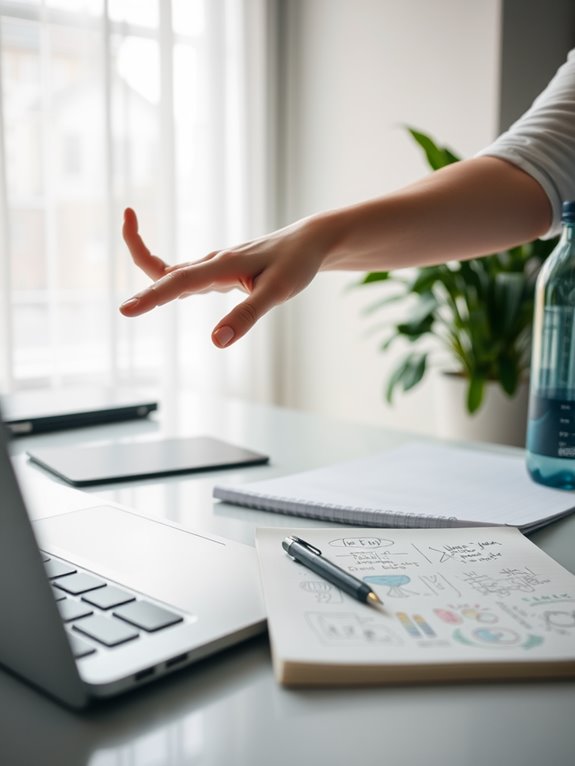
Shoulder rolls are a simple yet effective way to relieve tension and improve mobility in your upper body. By incorporating this movement into your day, you can boost circulation and reduce stiffness. Additionally, regular use of techniques like compact foam rollers can enhance muscle recovery and further promote flexibility. Exercise sliders, known for their core strength enhancement, can also be a great addition to your routine for improving overall fitness. Regular use of acupressure mats can promote muscle relaxation and improve blood circulation, further aiding in the reduction of stiffness. Consistency in performing these movements can yield optimal results over time. Let's explore the benefits and learn how to perform shoulder rolls correctly.
Benefits of Shoulder Rolls
When you incorporate shoulder rolls into your desk routine, you can quickly alleviate tension and improve mobility in your upper body. This simple yet effective exercise helps reduce stiffness, enhances blood circulation, and promotes relaxation. You'll notice that your posture improves, allowing for better alignment as you work. Additionally, regular physical activity, such as shoulder rolls, can enhance muscle recovery that foster accountability and productivity in work environments. Regular movement can also support continuous health monitoring, ensuring that your body remains in optimal condition throughout the day. Engaging in quick exercises like shoulder rolls can also contribute to all-day activity tracking, helping you stay aware of your fitness goals. Moreover, incorporating stress relief tools like stress balls can further aid in managing tension while at your desk.
Here's a quick overview of the benefits:
| Benefit | Description | Result |
|---|---|---|
| Alleviates Tension | Releases tight muscles | Feeling relaxed |
| Improves Mobility | Increases range of motion | Easier movement |
| Enhances Circulation | Boosts blood flow | Improved energy levels |
| Promotes Relaxation | Reduces stress | Better focus |
| Supports Posture | Encourages proper alignment | Less discomfort |
Incorporating shoulder rolls is a small change with big benefits!
How to Perform
To enjoy the benefits of shoulder rolls, you can easily incorporate them into your workday at your desk.
Start by sitting up straight in your chair, with your feet flat on the floor. Inhale deeply, lifting your shoulders toward your ears. As you exhale, roll your shoulders back and down, creating a smooth circular motion. Incorporating quick adjustments during your breaks can help maintain your overall fitness. Additionally, consider using an ergonomic monitor mount to enhance your workspace setup for better posture and reduced strain. This is especially important as high-quality fabrics in insulated lunch bags can provide durability similar to what you seek in your ergonomic tools. Implementing adjustable height options can also contribute to a healthier work environment by promoting better alignment.
Repeat this movement five to ten times. Then, switch directions by rolling your shoulders forward for another five to ten repetitions.
Focus on relaxing your neck and breathing steadily throughout the exercise. You can perform these rolls whenever you feel tension building in your shoulders or every hour as a quick break. Additionally, consider using a handheld massager for targeted muscle relief to further enhance your relaxation experience after long hours at your desk.
It's a simple yet effective way to relieve stiffness and improve your posture.
Standing Calf Raises
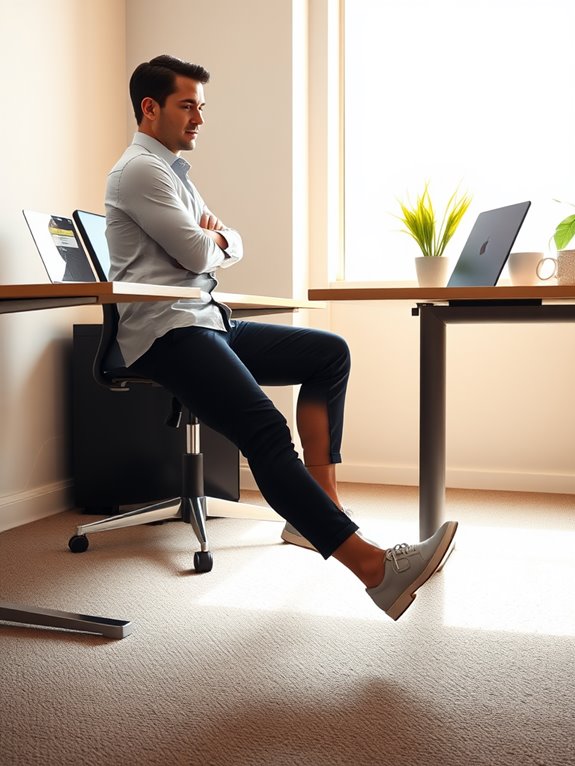
Standing calf raises are a simple yet effective exercise you can do right at your desk to combat stiffness and improve circulation in your lower legs. Incorporating unique products for fitness into your workspace can further enhance your exercise routine. Medicine balls can be a great addition to your routine, enhancing core stability and overall fitness. Additionally, using exercise bands can provide resistance and increase the effectiveness of your workouts.
To perform this exercise, stand up straight with your feet hip-width apart. Slowly rise onto your toes, lifting your heels off the ground. Hold this position for a second, then lower your heels back to the floor. Regular movement like this promotes blood circulation, similar to how acupressure mats enhance relaxation.
Repeat this movement for 10 to 15 reps. You can increase the intensity by holding onto your desk for balance or performing the exercise on one leg. Incorporating calf raises into your daily routine helps strengthen your calves, reduces discomfort, and boosts blood flow, similar to how Pilates rings enhance muscle tone during workouts.
Wrist and Finger Stretches
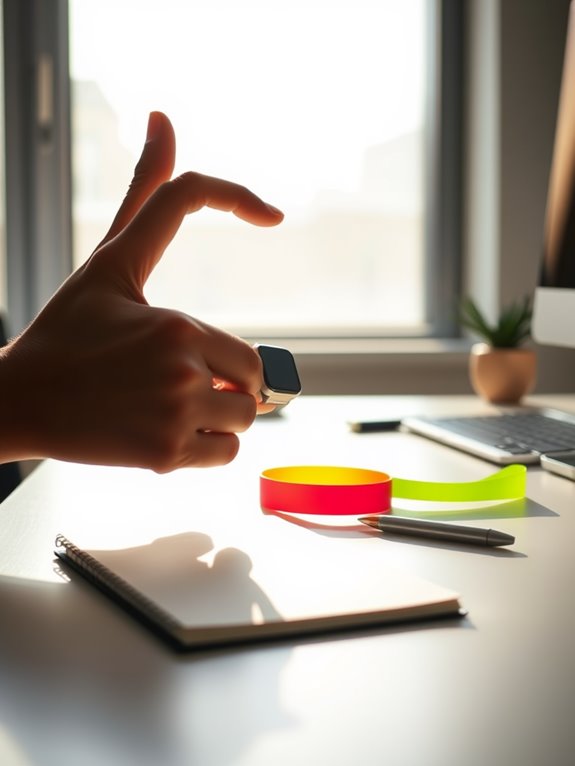
As you type away at your desk, it's easy to forget about the strain on your wrists and fingers. To combat stiffness, try these quick stretches. First, extend one arm, palm up, and gently pull back on your fingers with your other hand. Hold for 15 seconds. Next, make a fist, then spread your fingers wide, repeating this 10 times. Finally, rotate your wrists clockwise and counterclockwise for 10 seconds each. Incorporating these stretches into your routine can enhance your overall mindfulness practices, promoting both physical and mental well-being. Additionally, incorporating regular resistance training can further improve your muscle strength and flexibility.
Here's a quick reference table for these stretches:
| Stretch Type | Duration | Repetitions |
|---|---|---|
| Finger Pull | 15 seconds | 1 |
| Fist to Spread | N/A | 10 |
| Wrist Rotation | 10 seconds each | 2 (clockwise, counterclockwise) |
Cool Down: Deep Breathing Techniques
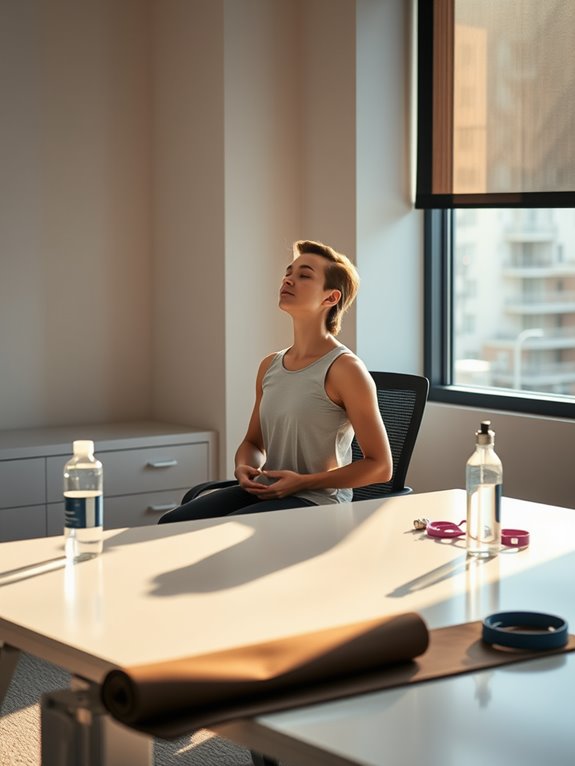
After your desk workouts, it's crucial to cool down with deep breathing techniques.
Not only do these techniques help you relax, but they also boost your overall well-being.
Let's explore some effective methods to incorporate deep breathing into your routine.
Benefits of Deep Breathing
Even when you're wrapped up in a busy day at your desk, taking a moment for deep breathing can provide significant benefits for your body and mind.
Deep breathing helps reduce stress, lowers your heart rate, and enhances focus. By inhaling deeply, you're increasing oxygen flow, which boosts energy levels and improves mental clarity.
This simple practice also promotes relaxation, easing muscle tension and alleviating the discomfort that often comes from prolonged sitting.
Additionally, taking a few minutes to breathe deeply can improve your mood, making you feel more centered and ready to tackle your tasks.
Techniques for Relaxation
Building on the benefits of deep breathing, incorporating relaxation techniques into your day can further enhance your well-being.
Start by finding a quiet space at your desk. Close your eyes, take a deep breath in through your nose, and hold it for a few seconds. Then, slowly exhale through your mouth. Repeat this for a few minutes.
You can also try progressive muscle relaxation: tense each muscle group for a count of five, then release. This can help you feel more grounded and less stressed.
Finally, visualize a peaceful scene while breathing deeply; it'll transport you away from workplace tension.
These simple techniques can help you recharge and improve focus throughout your day.
Frequently Asked Questions
How Often Should I Perform These Desk Workouts?
You should aim to perform these workouts at least once every hour. This frequency helps maintain your energy levels, reduces stiffness, and keeps you focused throughout the day. Consistency's key for best results!
Can These Exercises Be Done in a Small Office Space?
Absolutely, you can do these exercises in a small office space. Many require minimal room, so you can easily incorporate them into your routine without needing a lot of extra space. Just find a clear spot!
Do I Need Any Special Equipment for These Exercises?
You don't need any special equipment for these exercises. Just use your body weight, a sturdy chair, or a desk. These simple tools will help you stay active and reduce stiffness throughout your workday.
Are These Workouts Suitable for All Fitness Levels?
Yes, these workouts are suitable for all fitness levels. You can tailor the intensity to your abilities, making it easy to start at your own pace and gradually increase as you feel more comfortable.
How Can I Stay Motivated to Exercise During Work Hours?
To stay motivated during work hours, set small goals, schedule breaks, and track your progress. Find an exercise buddy, listen to energizing music, and remind yourself how great you'll feel afterward. You got this!
Conclusion
Incorporating these quick desk workouts into your routine can make a world of difference in how you feel throughout the day. Don't let stiffness turn you into a corporate statue! By taking just five minutes to stretch and move, you'll boost your energy and productivity. So, go ahead and channel your inner office ninja—your body will thank you for it! Remember, a little movement goes a long way toward staying fit and focused.