To prevent getting sick while traveling, prioritize hygiene by using hand sanitizers and antiseptic wipes to clean surfaces. Stay hydrated with safe drinking water, and opt for nutritious foods like fruits and whole grains to boost your immune system. Make sure you get enough sleep to recharge your body, and pack essential medications and first-aid supplies. These budget-friendly tips can keep you healthy on your journey, and there's even more to explore to enhance your travel experience.
Nomad Highlights
- Carry a small bottle of hand sanitizer with at least 60% alcohol to kill germs on-the-go.
- Use antiseptic wipes to clean surfaces in restaurants and transportation.
- Drink plenty of water daily by carrying a reusable water bottle to stay hydrated.
- Prioritize sleep and rest to boost your immune system during travel.
- Pack essential medications and a basic first-aid kit to address common health issues.
Prioritize Hygiene With Hand Sanitizers and Wipes
While you might be excited to explore new places, it's crucial to prioritize your hygiene to avoid getting sick.
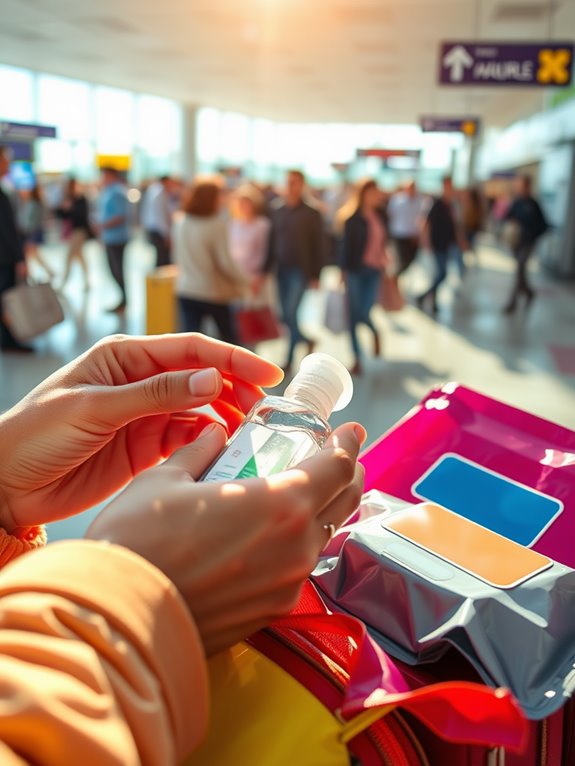
Hand sanitizers and wipes are your best friends when traveling. Keep a small bottle of hand sanitizer in your bag, so you can quickly clean your hands after touching surfaces like doorknobs, public transport handles, or ATM keypads. Using sanitizers with at least 60% alcohol** ensures effective germ protection. The Centers for Disease Control and Prevention recommend using a hand sanitizer with at least 60% alcohol for effective germ-killing. Additionally, carry antiseptic wipes to clean your eating surfaces, especially in restaurants or on airplanes. Using fragrance-free options in your hygiene products can further reduce the risk of skin irritation. Consider choosing hand sanitizers that kill 99.99% of germs to maximize your protection against illness. Furthermore, you can enhance your travel environment by using portable humidifiers** to maintain comfortable and healthy air quality, which can also aid in reducing the spread of airborne illnesses.
Hand sanitizers and wipes are essential travel companions for keeping your hands clean and reducing illness risk.
These simple steps can greatly reduce your risk of illness, allowing you to enjoy your adventures fully. Don't overlook these essential hygiene practices while you're on the go!
Stay Hydrated With Safe Drinking Water

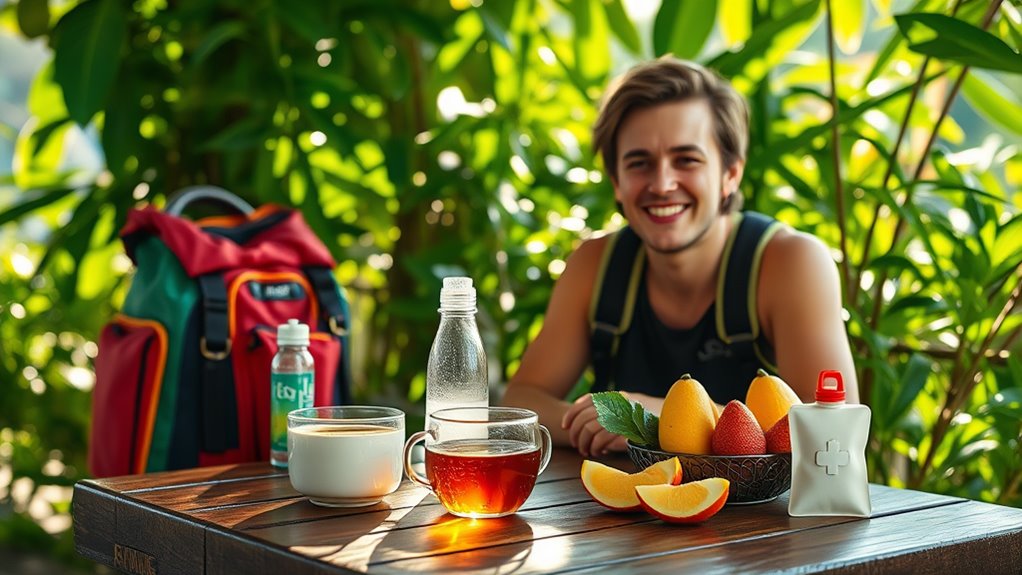
Staying hydrated is essential for maintaining your health while traveling, and ensuring you have access to safe drinking water is key.
Always carry a reusable water bottle to refill whenever possible. Choose bottled water from reputable brands if tap water isn't safe. Check local advisories or ask locals about the water quality. Consider using a portable Wi-Fi hotspot to stay connected while researching local water safety information.
When in doubt, consider using a portable water filter or purification tablets. Many travel filters can effectively remove harmful bacteria and viruses, providing peace of mind in remote areas. Filtration efficiency in portable water purifiers is crucial for ensuring clean drinking water, so be sure to select one that meets high standards. Avoid ice in drinks unless you're certain it's made from safe water. Additionally, drinking plenty of water supports your body in absorbing essential nutrients from travel-sized multivitamins that you may take on your journey.
If you're in a region with questionable water, aim to drink at least eight glasses a day to keep your body functioning well. Staying hydrated helps your immune system, so make water your travel companion, and enjoy your adventures without the worry of getting sick.
Choose Nutritious Foods to Boost Immunity
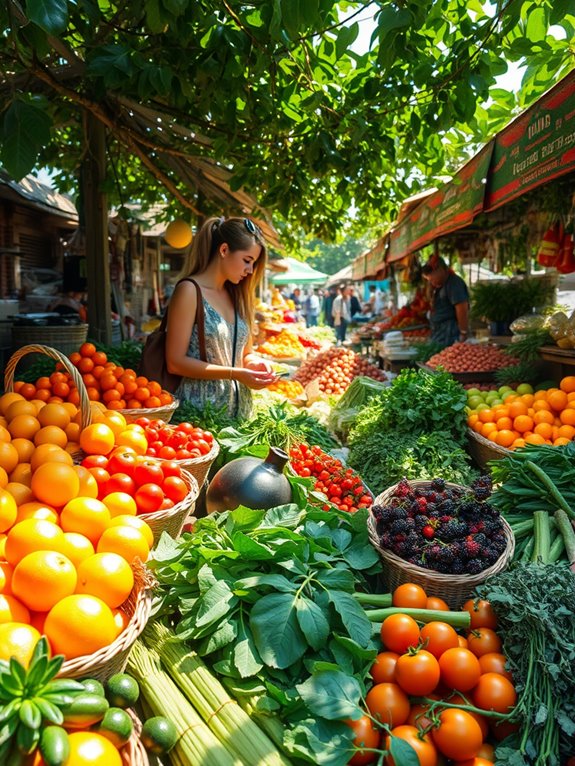
Hydration and nutrition go hand in hand when it comes to keeping your immune system strong while traveling. Choosing nutritious foods can make a significant difference in your health. Opt for fruits, vegetables, and whole grains to fuel your body with essential vitamins and minerals. Adding these foods to your travel diet can help combat stress and fatigue. Incorporating trail mix varieties into your snacks can also provide a balanced combination of protein and healthy fats to further support your immune system. Additionally, ankle resistance bands can be an effective tool for maintaining physical activity while on the road, which is crucial for overall health. For example, using eco-friendly materials in reusable bags can help reduce waste and promote sustainability while traveling. Consider snacking on vegetable crisps as a crunchy alternative to traditional chips, offering added nutrients and fiber to your diet. Whole grain options, such as whole grain crackers, provide additional fiber and essential nutrients that bolster your overall health.
Here's a quick guide to nutritious options:
| Food Category | Examples | Benefits |
|---|---|---|
| Fruits | Oranges, Berries | High in vitamin C |
| Vegetables | Spinach, Broccoli | Packed with antioxidants |
| Whole Grains | Quinoa, Oats | Provide sustained energy |
Get Enough Sleep to Recharge Your Body

Getting enough sleep is essential for recharging your body, especially when you're on the go.
When traveling, it's easy to skimp on rest, but that can lead to fatigue and a weakened immune system. Prioritizing sleep can make all the difference in how you feel and function. Ergonomic designs in portable chairs can also help improve your posture while sitting, which can contribute to overall comfort and relaxation. Additionally, using a memory foam travel pillow can enhance your neck support and promote better sleep quality during your travels. Choosing cooling pillowcases can further enhance your sleep quality by regulating temperature and reducing discomfort during hot nights. Using a Sleep Essential Oil Blend can create a calming atmosphere that promotes relaxation and improves sleep quality.
Here are some tips to guarantee you catch those Z's:
- Set a sleep schedule: Aim to go to bed and wake up at the same time each day, even in different time zones.
- Create a restful environment: Use earplugs and eye masks to block out noise and light.
- Avoid screens before bed: Limit your exposure to phones or tablets at least an hour before sleeping to help your mind unwind.
Incorporating handheld massagers into your routine can also help relieve tension and promote relaxation before bedtime.
Make sleep a priority, and your body will thank you!
Pack Essential Medications and First-Aid Supplies
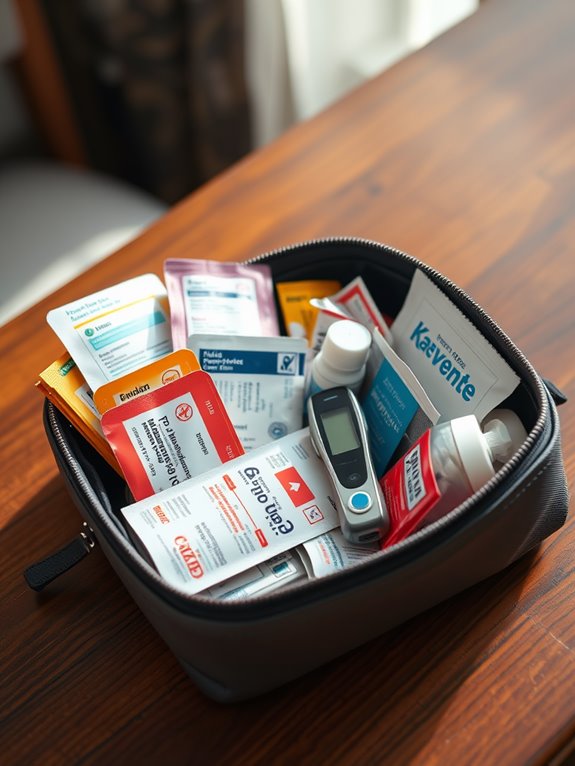
Packing essential medications and first-aid supplies can be a lifesaver during your travels. You never know when you might need them, so it's smart to prepare. Here's a quick list of what to include:
| Item | Purpose | Quantity |
|---|---|---|
| Pain relievers | Relieve headaches, aches | 10 tablets |
| Antihistamines | Combat allergies | 5 tablets |
| Band-aids | Treat minor cuts and scrapes | 5 pieces |
Make sure you also pack any personal medications, like prescriptions, along with a copy of your prescriptions. Having these essentials can help you avoid unnecessary discomfort and keep your trip enjoyable. Stay prepared, and you'll travel with peace of mind!
Frequently Asked Questions
How Can I Minimize Exposure to Germs in Public Spaces?
To minimize exposure to germs in public spaces, you should wash your hands frequently, use hand sanitizer, avoid touching your face, and maintain distance from sick individuals. Staying vigilant helps keep you healthier in crowded areas.
Are There Specific Vaccines Needed for Certain Travel Destinations?
Imagine your journey as a ship steering through uncharted waters; certain ports require special flags. Yes, specific vaccines are essential for destinations like yellow fever zones or areas with endemic diseases. Check ahead to chart your safe course!
What Should I Do if I Get Sick While Traveling?
If you get sick while traveling, prioritize rest and hydration. Seek local medical help if symptoms worsen. Always keep essential medications handy, and consider travel insurance to cover unexpected health issues during your trip.
How Can I Find Safe Food Options While Abroad?
When you're looking for safe food options abroad, stick to busy restaurants, choose freshly cooked meals, and avoid street food that's been sitting out. Trust your instincts, and don't hesitate to ask locals for recommendations.
Is Travel Insurance Worth It for Health-Related Issues?
When you consider travel insurance, think about peace of mind, financial protection, and coverage for unexpected health issues. It's worth it if you want reassurance while exploring new places and enjoying your adventures worry-free.
Conclusion
Traveling can be exhilarating, but it can also expose you to germs and illness. By prioritizing hygiene, staying hydrated, choosing nutritious foods, getting enough sleep, and packing essential medications, you can enjoy your adventures without worry. Imagine this: vibrant landscapes and new experiences await you, yet a single sneeze could dampen your journey. Don't let sickness steal your joy—take these simple, affordable precautions to safeguard your health and make the most of every moment on your trip.