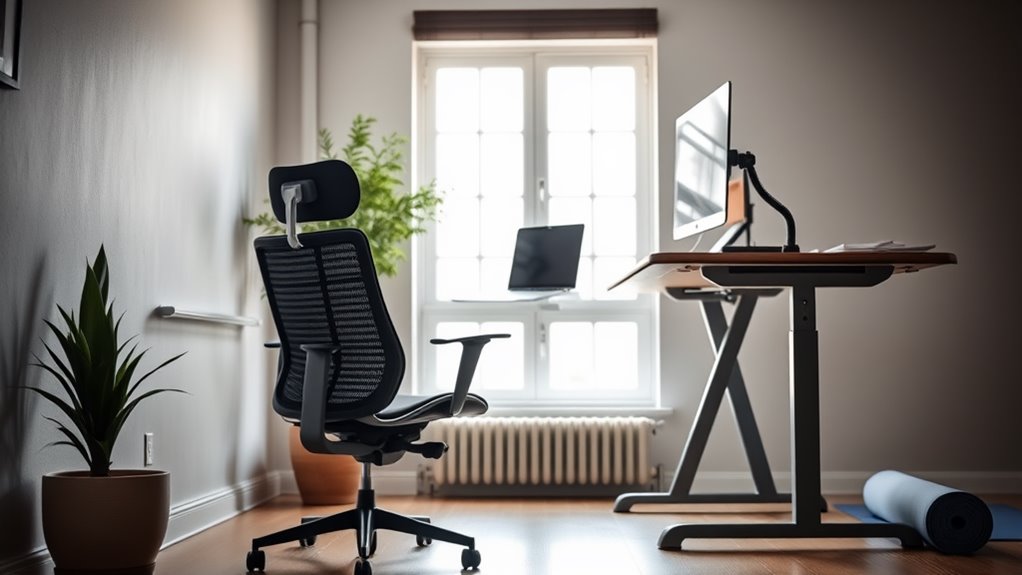
To fix poor posture from uncomfortable workspaces, start by evaluating your setup. Adjust your chair height so your feet rest flat and your knees are at a 90-degree angle. Invest in ergonomic furniture and tools that support your body. Incorporate stretching and strengthening exercises to counteract slumping. Make mindfulness a habit by checking your posture regularly. Finally, take movement breaks every hour to enhance circulation. Learn more about actionable tips and exercises to improve your workspace comfort.
Nomad Highlights
- Adjust your chair and desk height to ensure your feet are flat on the floor and elbows are at a 90-degree angle.
- Use ergonomic furniture, including chairs with lumbar support and adjustable features for comfort during prolonged sitting.
- Incorporate regular movement breaks and stretching exercises to relieve muscle tension and improve circulation throughout the day.
- Maintain monitor placement at eye level to avoid neck strain and encourage proper alignment while working.
- Engage in resistance training and core strengthening exercises to support better posture and muscle balance over time.
Assess Your Workspace Setup
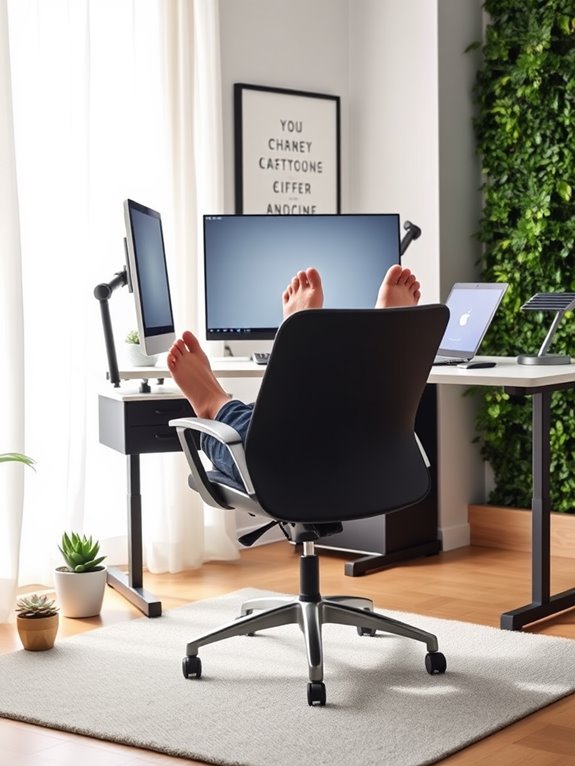
Your workspace plays an essential role in your posture. Start by evaluating your chair height; your feet should rest flat on the floor, with your knees at a 90-degree angle. A good ergonomic chair should offer adjustable features to enhance comfort and support. Additionally, aim for a chair that promotes breathable materials to keep you comfortable during long hours of work. Investing in ergonomic monitor mounts can also significantly improve your workspace setup and posture.
Next, check your desk's height to guarantee your elbows remain close to your body and form another 90-degree angle when typing. An adjustable footrest can further enhance your leg support, helping maintain proper alignment and comfort.
Monitor placement is vital too; it should be at eye level, allowing you to keep your neck straight.
Don't forget about lighting; proper illumination reduces strain on your eyes and encourages better posture.
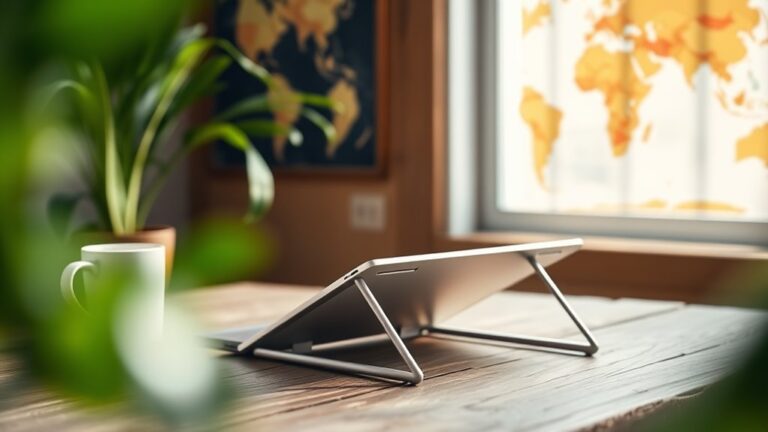
Finally, consider the distance between your screen and your eyes—about an arm's length is ideal. Additionally, using an ergonomic lapstand can help elevate your laptop to the proper height, promoting better posture and reducing discomfort during use.
Ergonomic Furniture and Tools
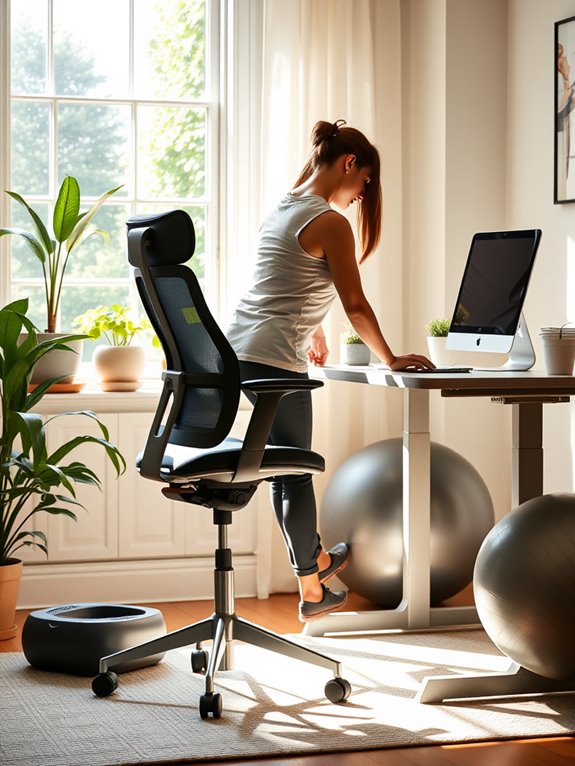
Investing in ergonomic furniture and tools can greatly enhance your posture and overall comfort while working. A quality ergonomic chair supports your lower back, encouraging a natural curve in your spine. Look for adjustable features, so you can customize the height and lumbar support to fit your body perfectly. An ergonomic desk can also make a difference; consider a sit-stand desk that allows you to change positions throughout the day. Additionally, using an ergonomic keyboard and mouse can reduce strain on your wrists and hands. Don't forget about accessories like monitor risers, which help keep your screen at eye level, minimizing neck strain. Moreover, incorporating portable lapstands can provide comfortable workspaces anywhere you go, ensuring optimal positioning and cooling for your devices. These ergonomic benefits are essential for maintaining comfort during long hours of work. Investing in high-density memory foam cushions can also enhance the comfort of your seating arrangement, making long hours at your desk more manageable. Furthermore, using ankle resistance bands can help strengthen the muscles that support good posture while you work. Consider adding lumbar support cushions to your seating setup, as they promote proper spine alignment and help alleviate discomfort during prolonged sitting.
Stretching and Strengthening Exercises
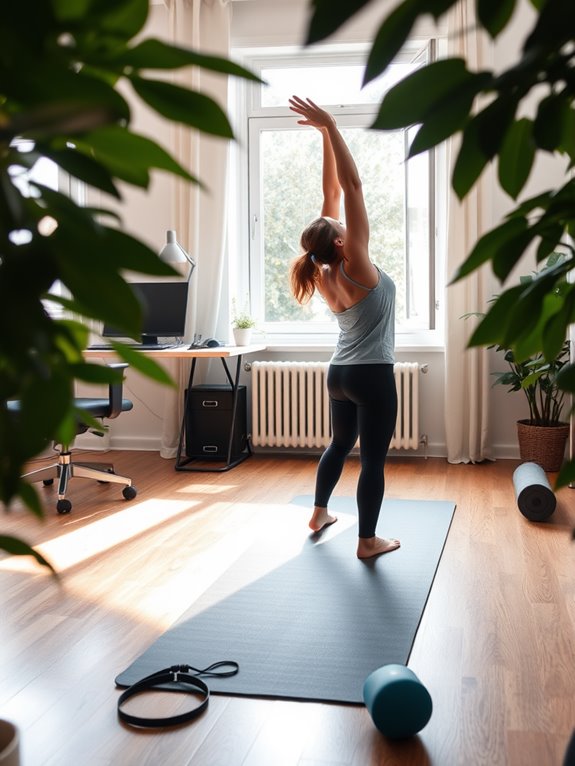
While ergonomic furniture and tools create a supportive environment, incorporating stretching and strengthening exercises is essential to maintaining good posture.
Start with simple stretches like neck rolls and shoulder shrugs to relieve tension. You can also try chest openers to counteract slumping. Additionally, practicing breathing techniques can enhance your overall posture by promoting relaxation and reducing stress. Using resistance bands can also be beneficial for reinforcing back and core strength during your routine. The use of acupressure mats can further enhance relaxation and aid in muscle tension relief. Furthermore, maintaining ergonomic comfort through adjustable tools can significantly reduce strain during daily activities.
Incorporate simple stretches like neck rolls and shoulder shrugs to ease tension and combat slumping.
For strengthening, focus on your core and back muscles; exercises like planks and bridges work wonders. Incorporate these routines into your daily schedule—aim for a few minutes every hour.
This not only helps alleviate discomfort but also reinforces proper alignment. Remember, consistency is vital. Set reminders to stand, stretch, and move, giving your body the care it deserves. Additionally, using tools like stretching straps can enhance your flexibility and assist in achieving deeper stretches.
Mindfulness and Posture Awareness

How often do you check in with your posture throughout the day? Practicing mindfulness helps you become more aware of your body and posture. By regularly tuning into how you sit or stand, you can make necessary adjustments to prevent discomfort and promote better alignment. Ergonomic designs, such as those found in ergonomic mice, can significantly support better wrist posture during long hours of use. Incorporating tools like balance boards can also enhance your overall stability and core strength, further supporting good posture. Additionally, engaging in strength training with adjustable dumbbells can improve your muscle balance, contributing to better posture. Using high-quality materials in your workout equipment can also enhance durability and user experience, making your exercises more effective. Including tools like compact foam rollers can help alleviate muscle soreness and improve flexibility, which further supports good posture.
Here's a quick guide to help you stay mindful about your posture:
| Awareness Activity | Posture Check |
|---|---|
| Sitting at your desk | Feet flat, back straight |
| Walking to a meeting | Shoulders relaxed, head up |
| On a phone call | Elbows close, phone at eye level |
| During a break | Stand tall, engage core |
| Watching TV or reading | Support lower back, avoid slouching |
Stay mindful, and your posture will thank you!
Regular Movement Breaks
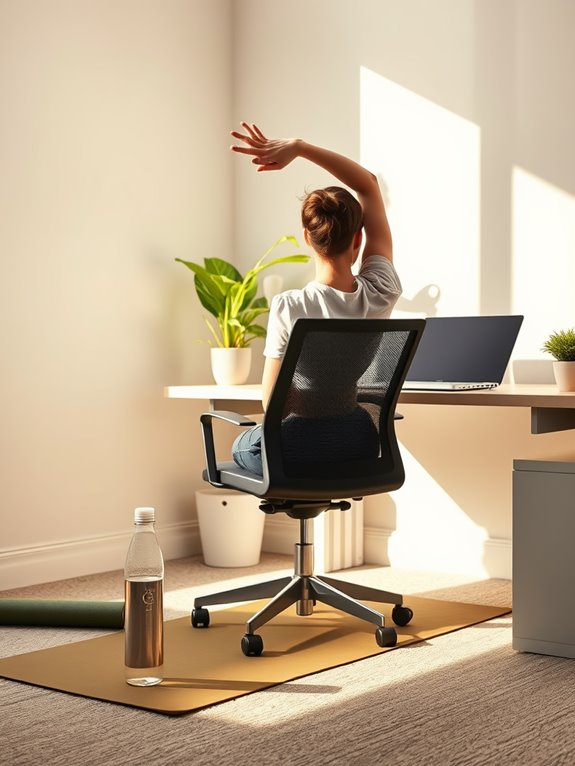
Incorporating regular movement breaks into your day can greatly improve your posture and overall well-being. When you sit for long periods, your muscles can become stiff and fatigued, leading to poor posture.
Set a timer to remind yourself to stand up and stretch every hour. Whether it's a quick walk, some neck rolls, or a few deep lunges, these moments of movement can re-energize you and relieve tension. Additionally, tracking your activity with a fitness tracker can help you stay accountable and motivated to move regularly throughout the day. Engaging in continuous health monitoring can provide insights into how your body responds to prolonged sitting and movement. Furthermore, using devices that support over 100 sports modes can help diversify your activity during breaks. Incorporating resistance training with bands during these breaks can further enhance muscle strength and support better posture.
Moreover, foldable exercise bikes are a convenient option for adding low-impact workouts into your routine during breaks. You'll notice that taking breaks helps you focus better and enhances your productivity. Plus, regular movement can strengthen your muscles, making it easier to maintain proper alignment throughout the day.
Frequently Asked Questions
Can Poor Posture Affect My Mental Health?
Yes, poor posture can negatively impact your mental health. It often leads to discomfort and fatigue, which can decrease your mood and motivation. By improving your posture, you might boost your overall well-being and mental clarity.
How Long Does It Take to Improve Posture?
Patience prevails when improving posture. You'll notice positive changes in a few weeks with consistent effort. Regular practice and intentional adjustments create a stronger spine, so stick with it and embrace your evolving alignment!
Are There Apps to Help With Posture Reminders?
Yes, there are several apps available that help with posture reminders. You can set alerts, track your progress, and receive tips to improve your posture throughout the day. Try a few to find what works best for you!
Should I See a Chiropractor for Posture Issues?
Sure, seeing a chiropractor for posture issues sounds like a great idea—if you think magically fixing your spine's alignment will solve all your problems. Instead, consider strengthening your muscles and adjusting your workspace first.
Can My Footwear Impact My Posture?
Yes, your footwear can greatly impact your posture. Wearing supportive shoes helps align your body properly, reducing strain on muscles and joints. Flip-flops or high heels, on the other hand, can lead to poor posture.
Conclusion
You might think fixing your posture is too hard or takes too much time, but it's really about small, consistent changes. By evaluating your workspace, investing in ergonomic tools, and incorporating stretches into your day, you can make a real difference. Remember, your health and comfort matter. Imagine how much more energized and focused you'll feel when you prioritize your posture. Don't let discomfort hold you back—take action today for a happier, healthier you!