
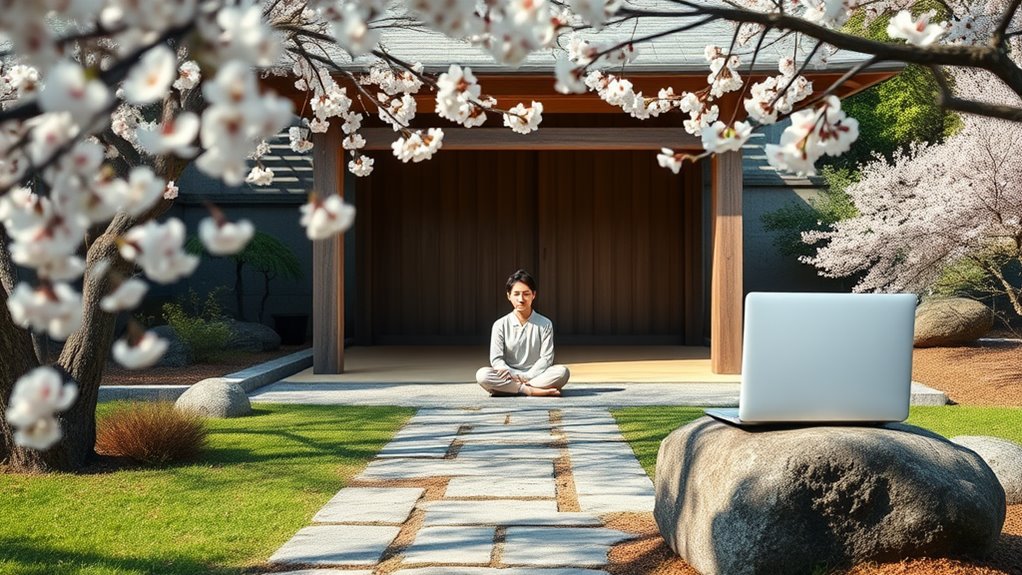
To practice Zen meditation in Japan as a digital nomad, find serene spaces like temples or quiet parks for your sessions. Incorporate short meditations into your remote work routine to boost focus and reduce stress. Explore local Zen temples for authentic experiences, and participate in workshops to learn from monks. Enhance your practice by connecting with the local culture through mindfulness activities. There's so much more to discover about living and meditating in Japan.
Nomad Highlights
- Identify Zen temples like Daitoku-ji or Eihei-ji that offer meditation sessions and workshops for beginners to enhance your practice.
- Create a dedicated meditation space in your temporary living arrangements, incorporating calming decor and scents for enhanced focus.
- Schedule daily meditation sessions, even short ones, to maintain consistency and reinforce mindfulness amidst your travels.
- Utilize local parks or quiet cafés as alternative spots for meditation to connect with nature and foster tranquility.
- Engage with the local Zen community by participating in meditation sessions and cultural activities to deepen your understanding and practice.
Understanding Zen Meditation: Origins and Principles
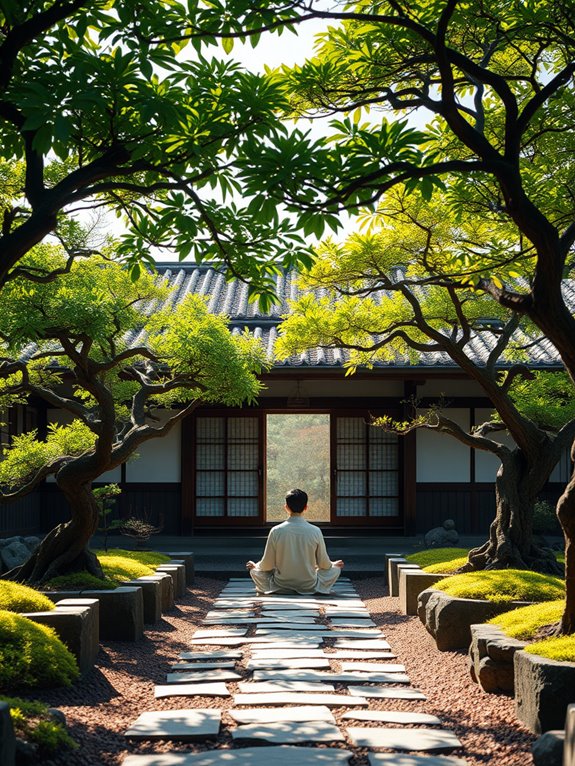
Zen meditation, or Zazen, has deep roots in Japanese culture, blending simplicity with profound spiritual insight. You'll find that its origins trace back to the teachings of Siddhartha Gautama, the Buddha, who emphasized mindfulness and awareness. Practicing Zen meditation techniques can provide additional tools to enhance your practice and deepen your experience. Engaging with unique meditation products can also support your journey, offering various aids to improve your practice. Additionally, the practice is often complemented by mindfulness tools that help practitioners maintain focus during meditation.
As you practice Zazen, you'll focus on your breath and observe your thoughts without judgment. This method encourages a state of stillness and clarity, helping you disconnect from the chaos of daily life. Regular meditation can also promote muscle relaxation and reduce stress, enhancing your overall well-being.
Focusing on your breath and observing thoughts cultivates stillness, allowing you to disconnect from daily chaos.
The core principles include letting go of attachments and cultivating a non-dualistic mindset. By embracing these concepts, you'll deepen your understanding of both Zen and yourself. Incorporating acupressure mats into your relaxation routine can further enhance your meditation experience, promoting physical comfort and mental clarity.
As a digital nomad, integrating Zen meditation into your routine can enhance your focus and creativity, making it easier to navigate life's challenges.
Finding the Right Space for Meditation in Japan
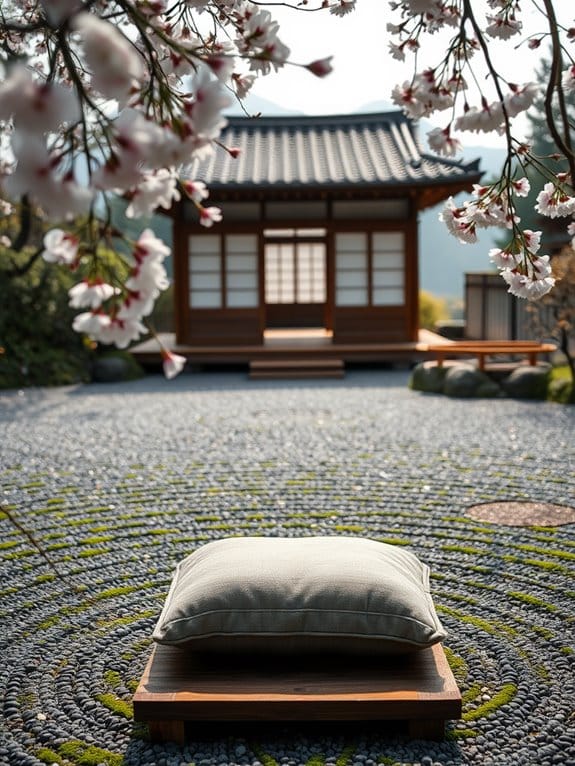
Finding the right space for meditation in Japan can greatly enhance your Zazen practice.
Whether you're in a bustling city or a serene countryside, the environment can profoundly impact your focus. Here are some tips to help you find the perfect spot:
- Temples: Many temples welcome visitors for meditation sessions, offering a tranquil atmosphere. Consider bringing a compact foam roller to relieve any muscle tension after long hours of travel. Additionally, some temples often host guided meditation sessions that can enrich your practice.
- Parks: Look for quiet corners in local parks, where nature can help you connect deeply. Consider bringing a portable chair, as many ergonomic designs can provide comfort during extended meditation sessions. Surrounding yourself with nature can enhance your mindfulness and deepen your connection to the present moment.
- Cafés: Some cafés provide a calming ambiance; choose one with soft lighting and low noise.
- Home: Create a dedicated meditation corner in your living space, using cushions and calming decor. Consider incorporating biofeedback devices to enhance your mindfulness practice further. This personal space can become a sanctuary where you can retreat and rejuvenate your spirit.
Incorporating Zen Meditation Into Your Remote Work Routine
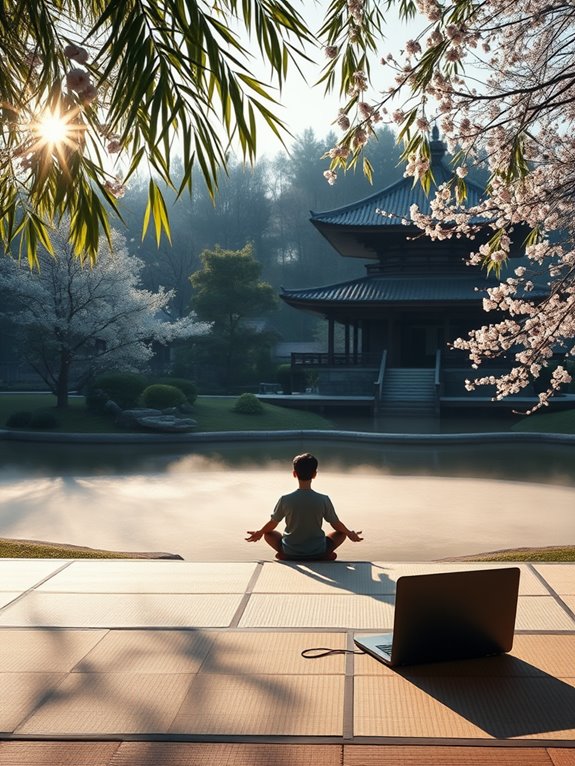
As you navigate the challenges of remote work, incorporating meditation into your daily routine can greatly enhance your focus and productivity.
Start your day with a short session, even just five minutes, to set a calm tone. Use breaks during your work to step away from screens and practice mindful breathing. Engaging in mindfulness exercises can ground you in the present, potentially leading to reduced anxiety and improved well-being. Incorporating physical activity, such as ankle resistance bands, into your routine can further enhance your focus and overall wellness. Additionally, engaging in breathwork techniques can complement your meditation practice and deepen your self-discovery. Personal air purifiers can also improve your environment by ensuring clean air while you work, enhancing your overall meditation experience.
Begin your day with a brief meditation to cultivate calmness, and use breaks to practice mindful breathing away from screens.
When you feel overwhelmed, take a moment to center yourself with a quick meditation. This helps clear your mind and refocus your energy.
You could also schedule longer sessions in the afternoon to recharge. Remember, consistency is key; try to meditate at the same time each day to build a habit. Regular practice can reinforce stress reduction and foster positive thinking patterns over time.
Exploring Zen Temples and Meditation Centers
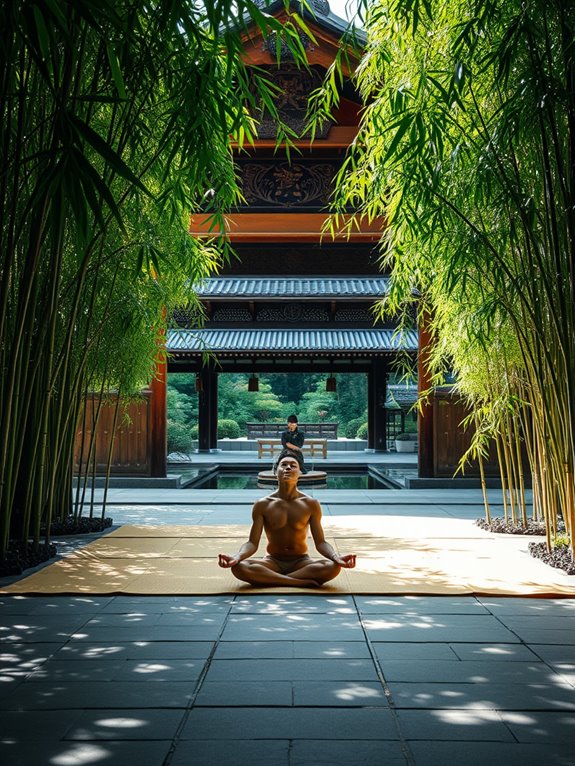
While exploring Japan, you'll discover numerous Zen temples and meditation centers that offer a unique opportunity to deepen your practice.
Each location provides a serene environment that helps you connect with your inner self. Here are four must-visit spots:
- Daitoku-ji in Kyoto – A large complex with multiple sub-temples, each offering meditation sessions.
- Eihei-ji in Fukui – A stunning temple founded by Zen master Dogen, known for its tranquil atmosphere and authentic Zen teachings. Many of these places also feature traditional Zen products for purchase, enhancing your meditation experience. Engaging in meditation can significantly promote mindfulness and relaxation, crucial elements for a fulfilling Zen journey.
- Shunkoin Temple in Kyoto – Offers Zen meditation workshops tailored for beginners and digital nomads.
- Engaku-ji in Kamakura – One of the most important Zen temples in Japan, perfect for quiet reflection.
Visiting these centers will enhance your Zen journey. Additionally, many of these temples also offer unique products related to Zen practice, allowing you to bring a piece of your experience home.
Mindful Practices to Enhance Your Meditation Experience
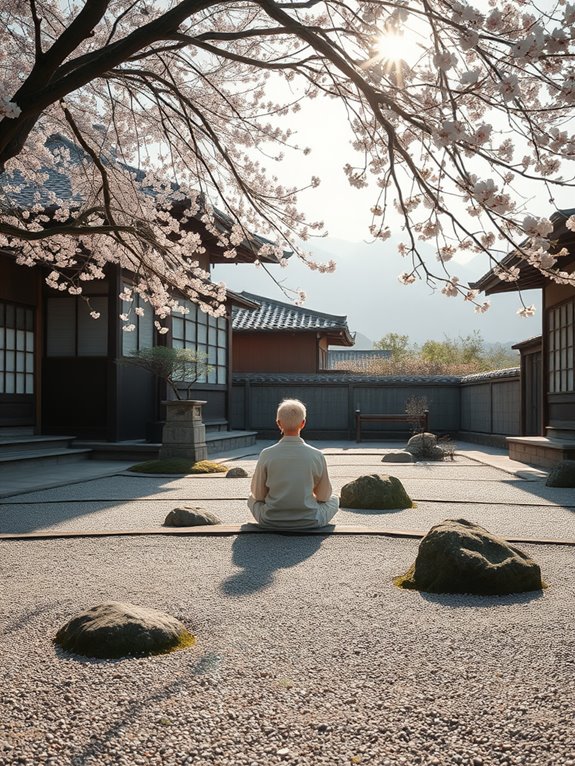
To truly elevate your meditation experience, incorporating mindful practices into your routine is essential.
Start by setting a dedicated space for meditation, free from distractions. This creates a sanctuary that helps you focus and can be enhanced with unique products designed to improve your meditation environment.
Next, embrace mindful breathing; pay attention to each inhale and exhale, grounding yourself in the present. Drinking herbal teas like chamomile or peppermint can also promote relaxation and calmness, enhancing your overall meditation experience.
You can also practice gratitude by reflecting on what you appreciate in your life before each session. Additionally, consider using essential oils known for their calming properties, such as lavender or chamomile, to enhance your relaxation.
Consider integrating gentle yoga or stretching to prepare your body, enhancing your relaxation. Using calming scents, like essential oils, can further enrich your practice, particularly those with therapeutic benefits that promote relaxation and peace. Quality essential oils ensure that you receive the full benefits of aromatherapy, enhancing your overall experience.
Finally, engage in mindful walking, allowing each step to connect you with your surroundings.
These practices will deepen your meditation, fostering a more profound sense of awareness and peace.
Connecting With Local Culture Through Zen
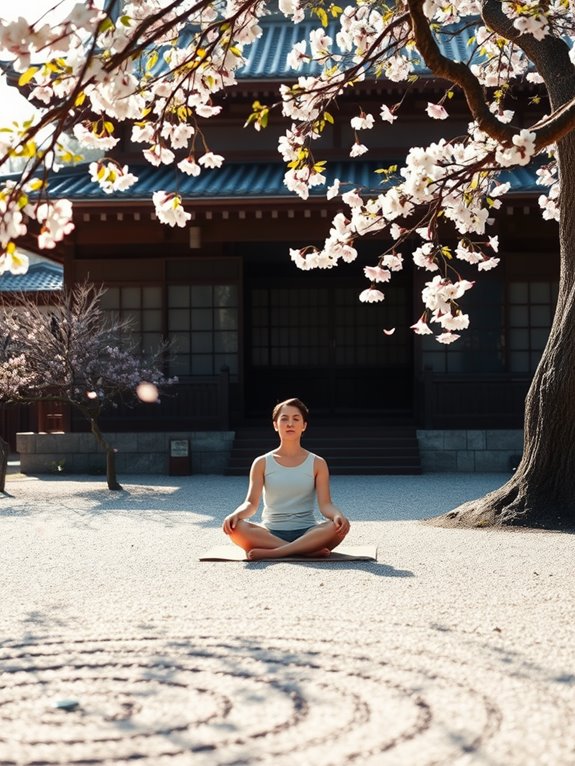
Immersing yourself in Zen meditation offers a unique opportunity to connect with Japan's rich cultural heritage. By engaging with local practices, you deepen your understanding and appreciation of the culture. Here's how you can connect through Zen:
- Visit Zen Temples: Experience authentic meditation sessions led by seasoned monks in serene temple settings. Additionally, many temples offer unique products that reflect the Zen philosophy, allowing you to take a piece of the experience home with you. Portable water purifiers can enhance your travel experience, ensuring safe hydration while you explore. Many temples also provide handcrafted items that embody the spirit of Zen, perfect for mindful living. Exploring these temples can also introduce you to traditional artifacts that showcase the history and artistry behind Zen practices.
- Participate in Tea Ceremonies: Learn the art of mindfulness through the meticulous preparation and consumption of matcha tea.
- Explore Zen Gardens: Reflect in the tranquility of carefully designed gardens, which embody the principles of Zen aesthetics.
- Attend Cultural Festivals: Join local celebrations that honor Zen traditions, providing a deeper insight into community practices.
These experiences enrich your journey and foster a greater appreciation for Japan's spiritual landscape. Additionally, engaging in unique cultural experiences can help you discover products that resonate with your newfound appreciation for Zen practices.
Tips for Maintaining a Consistent Meditation Practice While Traveling
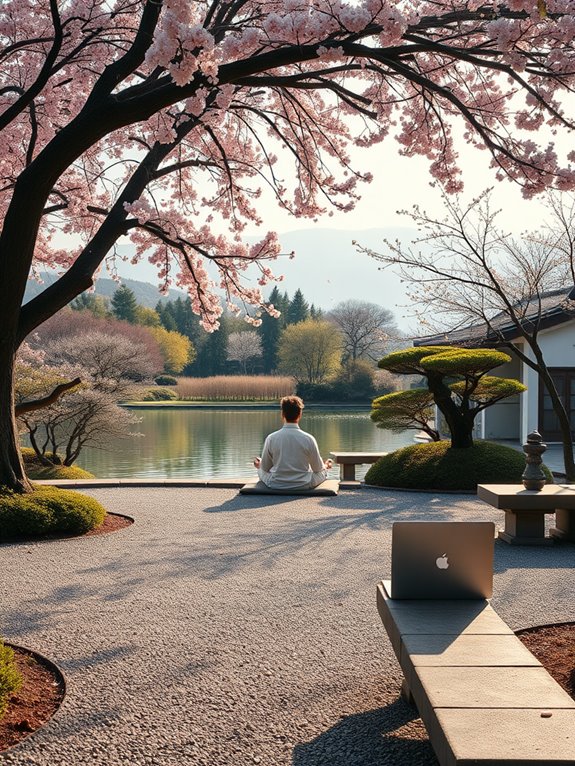
Staying committed to your meditation practice while traveling can be challenging, but with some intentional strategies, you can integrate mindfulness into your journey.
First, set a specific time each day for your meditation, just like you'd for any important appointment. Find a quiet spot in your accommodation or a nearby park where you can sit peacefully.
Designate a daily meditation time and seek a tranquil space to cultivate peace amidst your travels.
Use guided meditation apps to help you stay focused, especially in new environments. If time is tight, even a few minutes of deep breathing can be beneficial.
Embrace local traditions by participating in a Zen meditation session at a temple.
Finally, keep a travel journal to reflect on your experiences, deepening your mindfulness and enhancing your overall journey. Incorporating structured guidance in your journaling can amplify your reflective practice during travels.
Frequently Asked Questions
What Should I Wear for Zen Meditation Sessions in Japan?
For Zen meditation sessions, wear comfortable, loose-fitting clothing like a kimono or simple athletic wear. You'll want to avoid anything restrictive, allowing you to focus on your practice without distractions or discomfort.
Can I Participate in Zen Meditation if I'm Not Religious?
Zen meditation welcomes everyone, regardless of belief. Think of it as a peaceful oasis, where you can quiet your mind and find clarity. You don't need to be religious to embrace its benefits.
How Long Are Typical Zen Meditation Sessions?
Typical Zen meditation sessions last anywhere from 20 minutes to an hour. You'll find that many practitioners prefer shorter sessions to maintain focus and deepen their experience, but longer sessions can also be beneficial.
Are There Any Costs Associated With Zen Meditation Retreats?
When you consider Zen meditation retreats, think of it as an investment in your well-being. While some are free, others may charge fees for accommodations, meals, and teachings, so you'll want to budget accordingly.
Is It Necessary to Speak Japanese for Meditation Classes?
You don't necessarily need to speak Japanese for meditation classes. Many instructors offer sessions in English or provide translations. However, knowing some basic phrases can enhance your experience and help you connect more deeply.
Conclusion
Embracing Zen meditation while steering through the bustling life of a digital nomad in Japan creates a beautiful contrast between chaos and tranquility. As you immerse yourself in the rhythm of your work, don't forget to carve out moments of stillness. By blending your professional journey with mindful practices, you'll discover a deeper connection to both your inner self and the rich culture around you. Ultimately, it's in this balance where true growth and understanding unfold.