
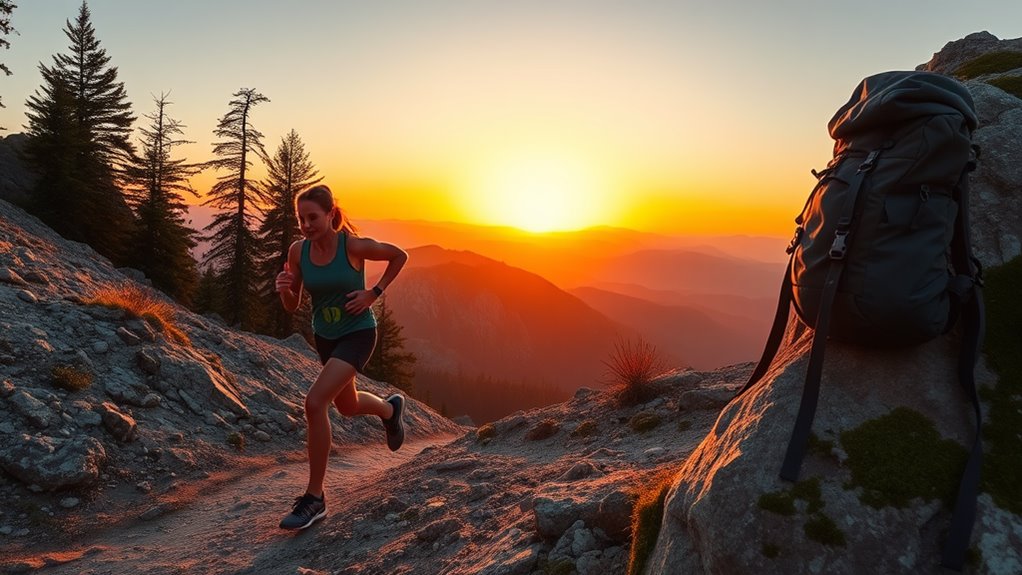
To make the most of your trail running adventures, choose quality gear like lightweight shoes and moisture-wicking clothes. Stay hydrated with handheld bottles or packs. Be mindful of your foot placement on diverse terrains, and always prioritize safety with a first aid kit and a fully charged phone. Fuel up with portable snacks and electrolyte drinks to maintain your energy. Engage with local communities for support and new trails, and you'll find even more tips that enhance your journey ahead.
Nomad Highlights
- Invest in lightweight, quality trail running shoes for optimal grip and support on varied terrains.
- Utilize moisture-wicking clothing and hydration systems to stay comfortable and hydrated on long runs.
- Familiarize yourself with the terrain to navigate safely and adjust your foot placement accordingly.
- Engage with local running communities to discover new trails and gain motivation from fellow enthusiasts.
- Prioritize recovery days and listen to your body to avoid burnout while maintaining your fitness routine.
Choosing the Right Trail Running Gear
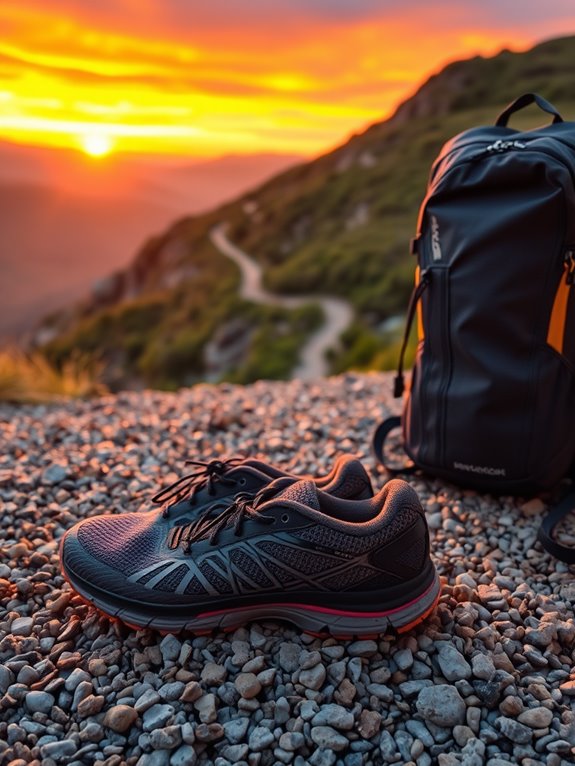
Choosing the right trail running gear can make all the difference in your experience on the trails.
Start with quality footwear; trail running shoes provide grip and support for uneven surfaces. Look for a lightweight pair that fits snugly but isn't too tight.
Next, consider moisture-wicking clothing to keep you comfortable and dry. Opt for breathable fabrics that allow for movement without chafing. Additionally, compact elliptical machines can be a great addition to your off-trail training routine to improve your cardiovascular fitness. Incorporating advanced health monitoring features from smartwatches can help you track your progress and optimize your training. Don't forget to carry a water bottle with a filter, like the GRAYL GeoPress, to ensure you stay hydrated with clean water from various sources. Selecting a bottle with double-wall vacuum insulation can help maintain your beverage temperature and enhance your hydration experience.
Don't forget a good hydration system, whether it's a handheld bottle or a hydration pack; staying hydrated is essential.
Accessories like a lightweight cap or sunglasses protect you from the sun, while a small backpack can carry essentials. Additionally, incorporating resistance bands into your training routine can enhance your strength and flexibility for tackling varying terrains.
Navigating Diverse Terrains

As you venture into the world of trail running, you'll encounter a variety of terrains that each demand different techniques and approaches.
On rocky trails, focus on foot placement to avoid slips and sprains. Keep your strides short and maintain a steady pace. Incorporating techniques from acupressure mats can enhance recovery and prevent injuries by promoting muscle relaxation. Utilizing True HEPA filters in your environment can also help reduce allergens and pollutants, ensuring you breathe clean air during your runs. Using ankle resistance bands can further strengthen your ankles, helping you navigate tricky trails more effectively.
When running on soft, muddy ground, be prepared for more resistance. Embrace a lighter footfall to prevent getting stuck.
Uphill sections require a forward lean and quick steps to maintain momentum. Conversely, on downhill trails, shift your weight back and use your arms for balance.
Finally, when traversing sandy or loose surfaces, engage your core and stay light on your feet. Regular use of acupressure mats can further aid in post-run recovery and improve overall performance. Adapting your strategy to the terrain will enhance your trail running experience and boost your confidence.
Safety Essentials for Trail Running
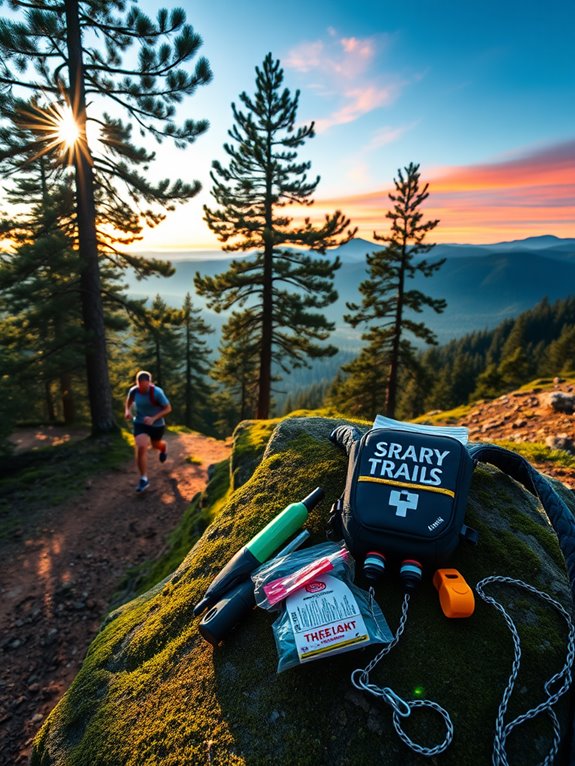
While trail running offers exhilarating experiences, prioritizing safety is essential to enjoy your runs without unnecessary risks.
Start by wearing proper footwear; trail shoes with good grip can prevent slips on uneven terrain. Always carry a small first aid kit, including items like band-aids, antiseptic wipes, and blister treatment. Ensure your kit is compact and lightweight to enhance portability during your runs. Additionally, consider bringing a travel toothbrush case made from BPA-free materials to maintain oral hygiene on longer runs. Having a reliable portable water purifier can ensure you stay hydrated with clean water during your adventure. Utilizing tools like portable UV sterilizers can also enhance cleanliness by eliminating germs on your gear. It's also a good idea to include adhesive band-aids in your first aid kit for minor cuts and abrasions.
Wearing trail shoes with good grip and carrying a first aid kit are essential for safe and enjoyable runs.
Familiarize yourself with the trail before hitting it—research its difficulty and any hazards. Running with a buddy not only enhances safety but also makes the experience more enjoyable.
Keep an eye on the weather; sudden changes can pose risks. Finally, carry a fully charged phone for emergencies, and inform someone of your route and expected return time.
These precautions can keep your adventure both thrilling and safe.
Staying Hydrated and Fueled
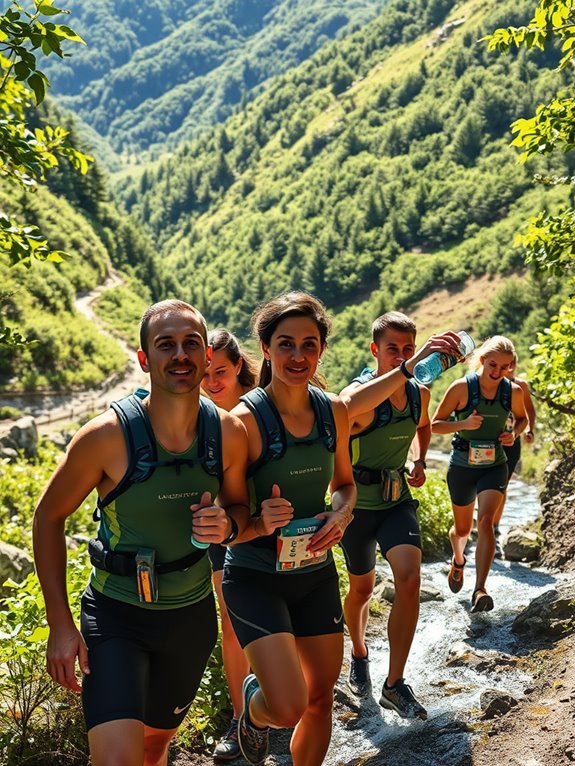
After guaranteeing your safety on the trails, it's time to focus on staying hydrated and fueled. Proper hydration keeps your energy levels up and helps you avoid fatigue. Carry a hydration pack or water bottles, and drink regularly, even if you don't feel thirsty. Aim for about 20-24 ounces of water per hour, adjusting based on temperature and intensity. Additionally, using a hydration backpack with a 2-liter capacity can ensure you have enough water for longer runs. It's also beneficial to incorporate portable protein powders into your nutrition strategy for quick energy replenishment during your runs. Consider including healthy snack bars in your gear for a convenient and nutritious source of energy while on the move. Nut butter packets, such as those with single-serving sizes, can also provide a great source of protein and healthy fats during your trail runs.
In addition to water, consider electrolyte drinks to replenish lost salts. For fuel, pack energy gels, bars, or trail mix, consuming small amounts every 30-45 minutes. This will help maintain your energy throughout your run. Experiment with different foods during training to find what works best for you. Furthermore, staying properly hydrated can enhance smoothie enjoyment and ensure you're feeling your best while running.
Staying properly hydrated and fueled guarantees you'll enjoy your trail running adventures to the fullest!
Building Endurance and Strength
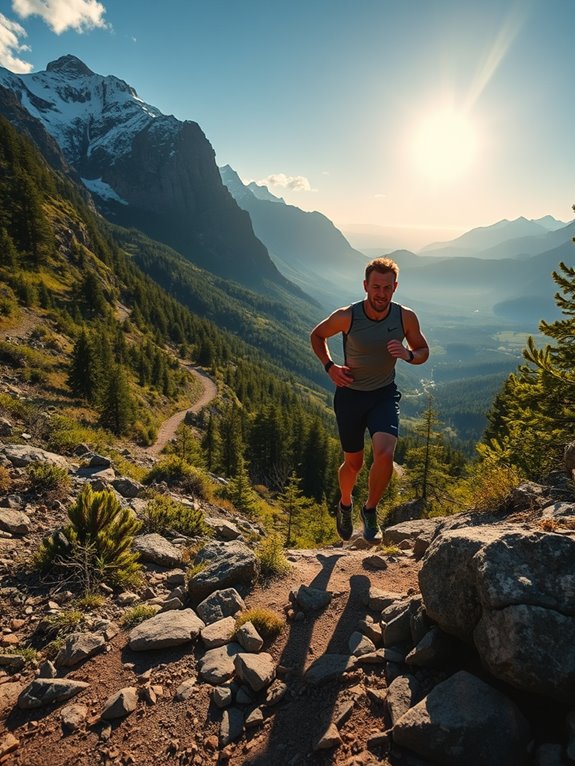
To build endurance and strength for trail running, you need to incorporate a mix of long runs, interval training, and strength workouts into your routine.
Start with long runs to enhance your aerobic base; aim for at least one long run each week. Next, include interval training—short bursts of speed followed by recovery periods—to boost your stamina and speed. Adding varied terrain to your runs can also help simulate race conditions and improve your adaptability. Incorporating resistance bands can be an effective way to enhance your strength training routine.
Incorporate long runs and interval training to build your aerobic base and enhance stamina for trail running.
Strength workouts are essential too; focus on exercises that target your core, legs, and hips, like squats and lunges. Incorporating suspension training can further improve your functional strength and stability, which is vital for navigating uneven terrain. Don't forget to mix in hill workouts to build power and resilience. Additionally, integrating exercises like pull-ups with a portable pull-up bar can further enhance your upper body strength, which is vital for trail running. Using portable kettlebells can also provide a versatile weight training option for building strength while on the go.
Listen to your body and allow for recovery days to avoid burnout. By balancing these elements, you'll develop the endurance and strength needed for those challenging trails ahead.
Maintaining Motivation on the Road
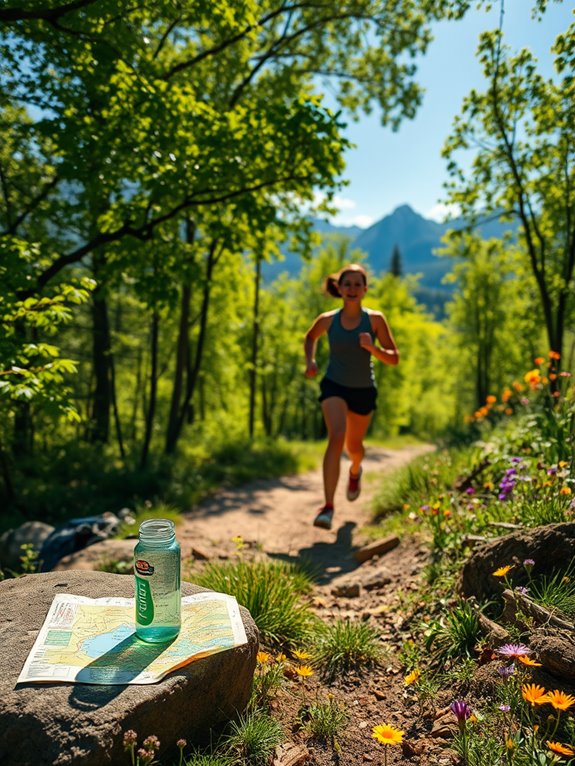
Staying motivated on the road can be challenging, especially when the excitement of your trail running routine starts to wane.
To keep your spirits high, set specific goals for each run, whether it's distance, pace, or exploring a new trail. Create a running schedule and stick to it, treating your runs like appointments you can't miss. High-quality ingredients in your post-run hydration can also help replenish your energy effectively. Using a high-quality anti-glare screen protector can also keep your device clear and crisp for tracking your runs.
Engaging with a community, whether online or at local meet-ups, can provide encouragement and accountability. Don't forget to celebrate your achievements, no matter how small—they'll remind you why you love running. Incorporating activities like stress relief coloring can also provide a creative outlet to unwind after your runs, as coloring promotes relaxation and mindfulness. Additionally, using essential oils like Bergamot oil can enhance your overall relaxation experience post-run.
Finally, mix things up with different terrains and scenic routes; variety can reignite your passion. Embrace the journey and enjoy every step!
Embracing Local Trail Culture
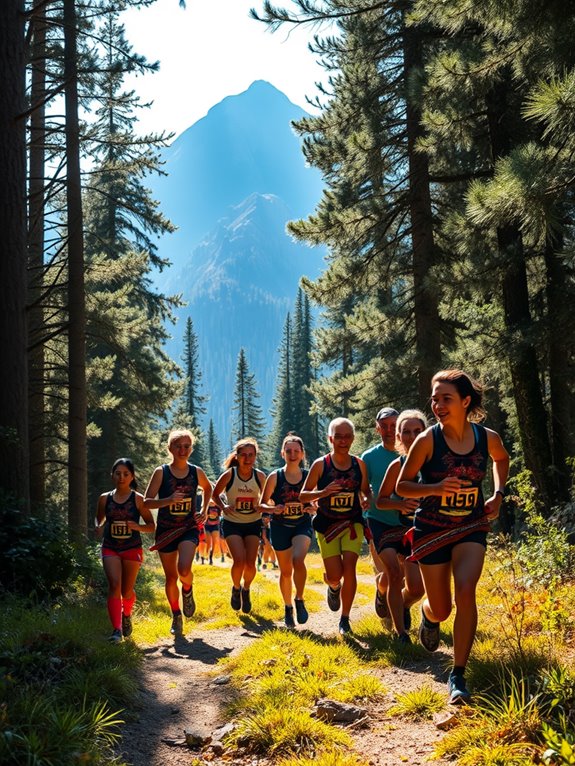
Connecting with the local trail culture can greatly enhance your running experience. When you arrive in a new area, take the time to learn about the trails and the community that surrounds them.
Chat with local runners, join group runs, or participate in trail events. This not only helps you discover hidden gems but also fosters a sense of belonging. Exploring unique products for every lifestyle can also help you find gear that suits the specific terrain and conditions of the trails you encounter. Additionally, consider investing in specialized gear designed for various environments to maximize your comfort and performance. Many outdoor enthusiasts find that unique products for every passion can elevate their overall trail experience. Moreover, discovering local trail networks can lead you to unique routes that showcase the beauty of the region.
Embrace the local customs, like post-run gatherings or trail clean-ups. Try to understand the stories behind the trails; they often reflect the culture and history of the area. Additionally, many regions offer unique products for outdoor enthusiasts that can enhance your overall trail experience. Respect the environment and other trail users. By immersing yourself in the local trail culture, you'll enrich your journey, create lasting friendships, and gain a deeper appreciation for each unique landscape you explore.
Frequently Asked Questions
How Do I Find Trails in Unfamiliar Areas?
To find trails in unfamiliar areas, you can use apps like AllTrails or Google Maps, check local running groups online, or ask locals for recommendations. Exploring parks or nature reserves often leads to hidden gems.
What Should I Do if I Get Lost on a Trail?
If you get lost on a trail, stay calm and retrace your steps. Use a map or GPS if available, and look for trail markers. If needed, signal for help or stay put until assistance arrives.
Can I Trail Run With a Dog?
Yes, you can definitely trail run with a dog! Just guarantee they're physically fit, keep them leashed for safety, and bring water for both of you. Enjoy the adventure together while respecting the trail rules!
What Are the Best Apps for Tracking Trail Runs?
Oh sure, because counting steps is a riveting hobby! For tracking trail runs, try Strava, MapMyRun, or Runkeeper. They'll log your miles and make you feel like a running superstar, even if you're just in the park.
How Can I Recover After Long Trail Runs?
After long trail runs, you should hydrate, stretch, and refuel with balanced meals. Rest is essential; consider light activity like walking or yoga. Listen to your body, and don't rush your recovery process.
Conclusion
In your journey as a nomadic trail runner, remember that every path you tread is an opportunity to grow, both in fitness and spirit. Embrace the challenges and let the trails whisper their secrets to you. With the right gear and a heart full of adventure, you'll conquer diverse landscapes and forge connections with fellow enthusiasts. So lace up your shoes, savor the scenery, and let the rhythm of your footsteps guide you to new horizons. Happy trails!