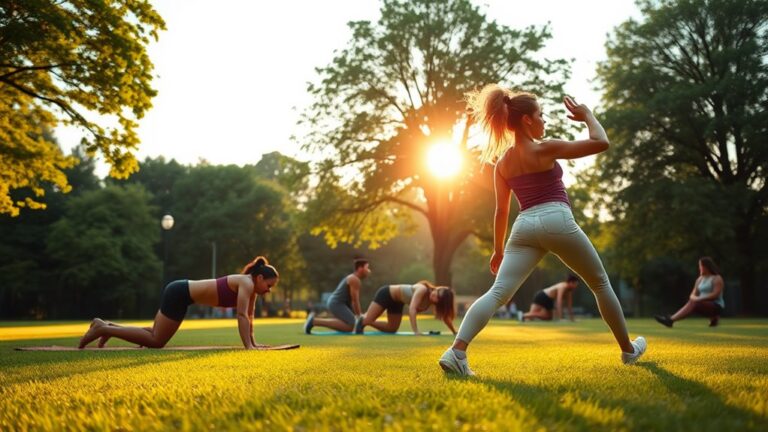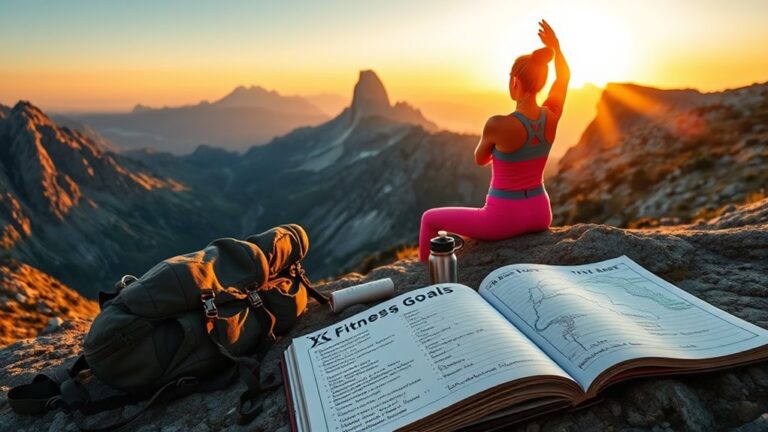
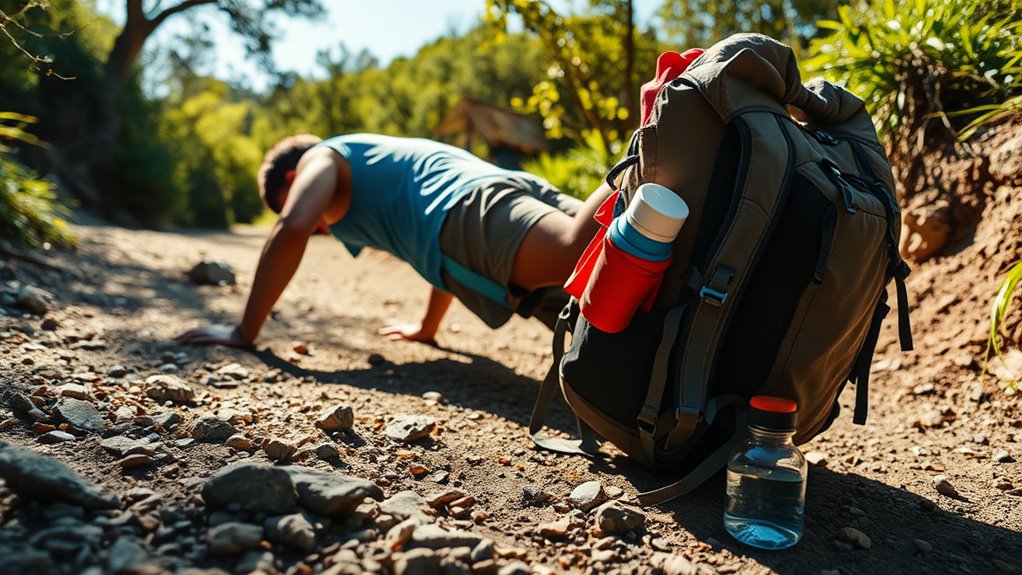
Backpack workouts let you turn everyday gear into a gym, boosting your strength and endurance. By adding weight to your backpack, you can engage your core while enhancing stability with exercises like squats and lunges. It's all about variety, so include resistance bands and small items like jump ropes for a dynamic routine. You'll discover flexible workout options outdoors or at home. Keep going, and you'll find even more tips to maximize your backpack workouts.
Nomad Highlights
- Use a sturdy backpack filled with adjustable weights like water bottles or sandbags to enhance strength and endurance during workouts.
- Incorporate various exercises such as squats, lunges, and push-ups using the backpack for added resistance and full-body training.
- Combine cardio activities like hiking or power walking with the backpack to elevate your endurance while building muscle strength.
- Utilize resistance bands and small items like jump ropes for versatile workouts that target multiple muscle groups and enhance fitness.
- Ensure proper backpack loading and fit to prevent strain, and set achievable fitness milestones for motivation and accountability.
The Benefits of Backpack Workouts
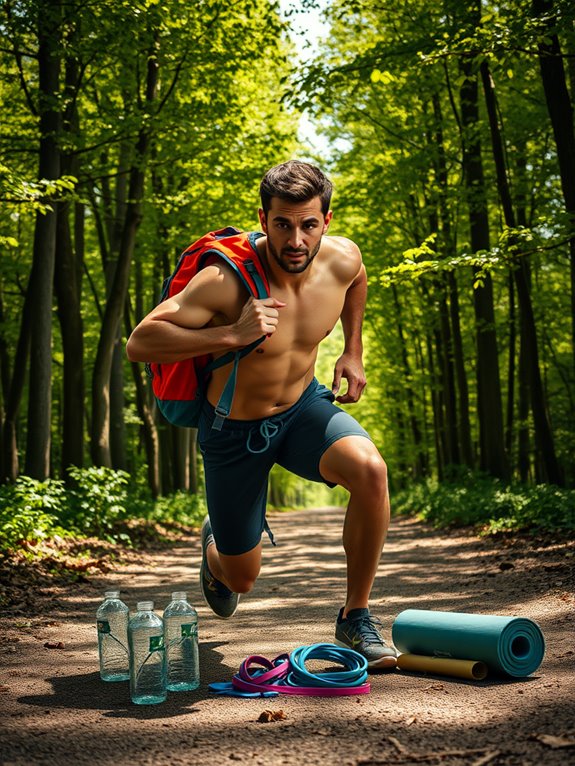
When you incorporate backpack workouts into your routine, you'll discover a range of benefits that go beyond just building strength.
First, you'll enhance your endurance as you carry added weight, challenging your cardiovascular system. This type of training also improves your stability and balance, since your core engages to support the load. Additionally, using adjustable dumbbells can enhance your workout variety and efficiency, providing incremental weight adjustments that support progressive overload. Portable kettlebells are another excellent option for added resistance and versatility in your workouts. These tools can help you achieve a wide weight range to accommodate various fitness levels, while integrating resistance bands can further diversify your exercise options.
Enhance your endurance and improve stability as you challenge your cardiovascular system with added weight in backpack workouts.
Plus, you'll enjoy the flexibility of working out anywhere—whether in a park, on a trail, or at home. Backpack workouts can spice up your routine, keeping you motivated and engaged.
They're also time-efficient, allowing you to combine strength and cardio in one session. Finally, you'll cultivate a sense of adventure as you explore new locations while staying fit, making fitness feel less like a chore and more like an experience.
Essential Gear for Your Backpack Gym
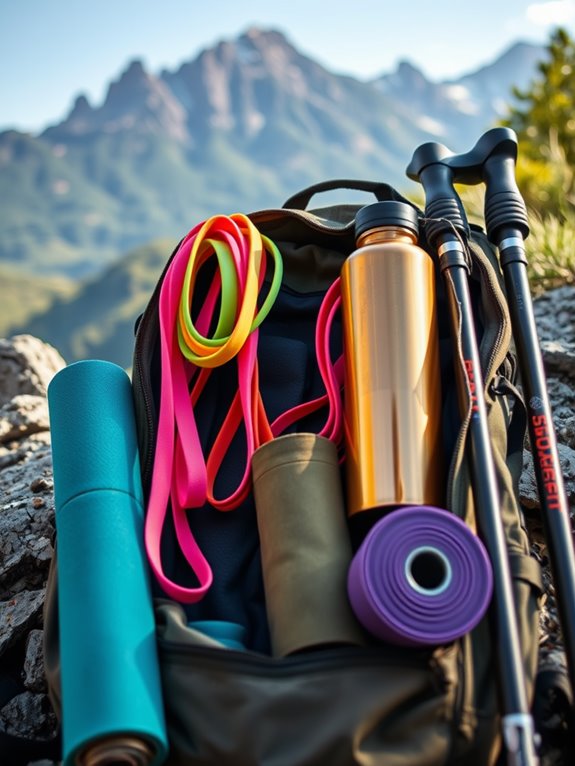
To make the most of your backpack workouts, having the right gear is essential.
Start with a sturdy, comfortable backpack that distributes weight evenly, preventing strain during your exercises. Consider adding resistance in the form of water bottles or sandbags; they'll help you build strength and endurance. Resistance bands are also a great addition, offering versatile options for various muscle groups. Their effectiveness is similar to that of ergonomic mice, which are designed to reduce strain and enhance comfort. Additionally, ergonomic designs can enhance your overall support and posture during your workouts. Incorporating high-quality materials like durable latex in your resistance bands can further improve your workout experience.
A yoga mat is also great for floor exercises, providing cushioning and grip. Don't forget a jump rope for cardio; it's lightweight and easy to pack.
Finally, include small items like resistance bands or a suspension trainer for versatility. Incorporating portable pull-up bars into your routine can enhance your workouts even further, allowing for effective upper body training anywhere.
With this essential gear, you're ready to transform any environment into a dynamic workout space, ensuring your backpack gym is both effective and enjoyable.
Get ready to break a sweat!
Full-Body Exercises You Can Do With a Backpack
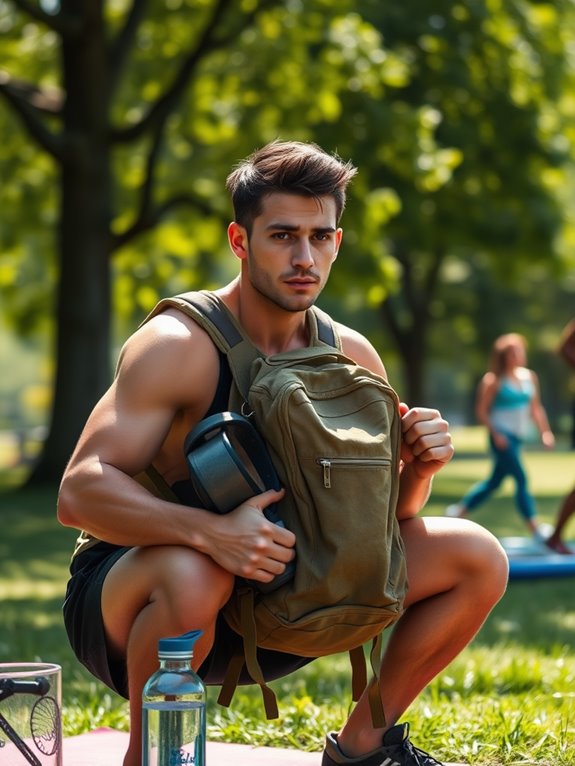
You can transform your backpack into a versatile workout tool that targets your entire body. By incorporating strength training, cardio, and flexibility moves, you'll not only build muscle but also boost your endurance and mobility. Compact elliptical machines can also be a great addition to your routine, providing a low-impact workout option. Resistance bands, which are made from durable, skin-friendly natural latex, can also enhance your backpack workouts by adding extra resistance to your exercises. Additionally, using your backpack for workouts can help you achieve enhanced relaxation through self-care practices, similar to the benefits of acupressure mats. Furthermore, engaging in these exercises can lead to improved hand strength through dynamic movements that utilize your grip. Incorporating adjustable length ropes into your routine can also provide an effective way to enhance coordination and cardiovascular endurance. Let's explore some effective full-body exercises that you can easily do with your backpack.
Strength Training With Weight
While many people think of dumbbells and kettlebells for strength training, a backpack filled with weight can be just as effective for full-body workouts. You can perform exercises like squats, lunges, and push-ups while wearing or holding the backpack. For added intensity, try overhead presses or deadlifts with the backpack. Additionally, incorporating compact massage guns after your workouts can enhance muscle recovery and alleviate soreness. As you engage in these exercises, consider tracking your progress with a fitness tracker to monitor your 24/7 health monitoring and stay motivated. Adjust the weight as needed to match your fitness level, and don't forget to engage your core for stability. Durability and protection are key factors when selecting gear for outdoor workouts, ensuring your backpack can withstand the rigors of exercise. Unique products related to fitness can also enhance your workout experience. Incorporating adjustable dumbbells into your routine alongside your backpack workouts will help you build strength and improve muscle tone. With just a little creativity, you'll discover that your backpack can become a powerful tool for strength training.
Cardio and Endurance Boost
Although many associate cardio workouts with running or cycling, a backpack can elevate your endurance training. Strap on your backpack and try hiking or power walking with a steady pace to get your heart pumping. Incorporating resistance bands into your routine can further enhance the effectiveness of your workouts. Additionally, using your backpack for added weight can mimic the effects of strength training while performing these exercises. Many wearable activity trackers can help monitor your heart rate during these workouts, providing insights into your health monitoring progress.
You can also incorporate high knees or plyometric movements, like jump squats, to up the intensity. Another great option is to perform burpees while wearing your backpack; this full-body exercise boosts your heart rate and builds strength.
For a fun twist, create a circuit combining these moves: alternate between jumping jacks, mountain climbers, and sprinting in place. Keep your backpack packed with weight for added resistance, and you'll transform your typical cardio routine into an exhilarating endurance challenge. Regular exercise can also help reduce eye strain and fatigue, which is especially beneficial if you're using screens frequently.
Grab your gear and start sweating!
Flexibility and Mobility Moves
Incorporating a backpack into your flexibility and mobility routine can enhance your workouts considerably.
Start with a standing forward fold, placing your backpack on your back. Let its weight deepen your stretch through your hamstrings and lower back. Using a backpack can also help to improve range of motion during this exercise as you work to balance the weight distribution.
Next, try lunging side-to-side while holding the backpack for added resistance, which will improve hip mobility. Using a strong adhesive to secure any weights inside the backpack can help maintain balance during your exercises. Adding exercise sliders to your routine can further elevate your home workout experience by providing a versatile tool for various exercises. For optimal results, consider the benefits of using portable blenders for post-workout smoothies that can complement your nutritional needs.
For a dynamic stretch, perform torso twists while holding the backpack at chest level. This engages your core and enhances spinal flexibility, making it a great complement to your overall routine.
Finally, incorporate backpack squats to work on lower body mobility while keeping your form in check.
Remember, control is key—focus on smooth, deliberate movements to maximize your flexibility gains and prevent injury. Mini steppers can also complement your routine by promoting cardiovascular health and enhancing overall fitness levels.
Get ready to feel more limber and agile!
Creating a Balanced Workout Routine
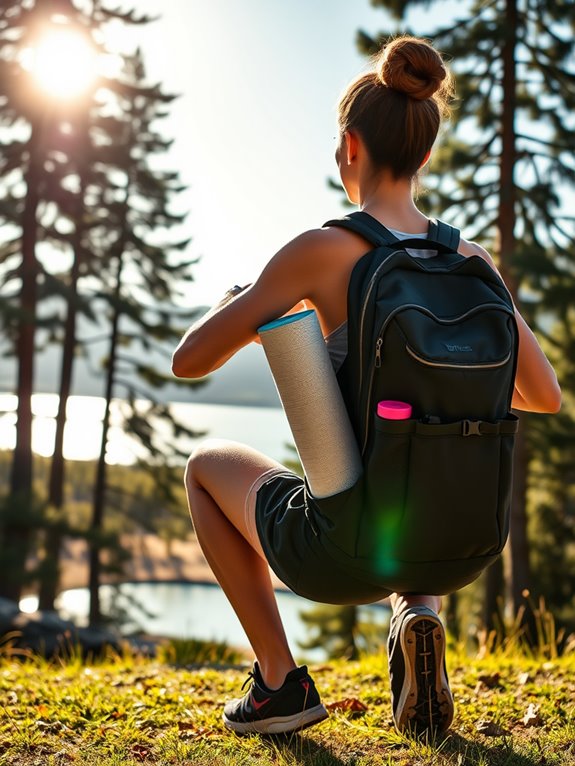
To create a balanced workout routine, you'll want to focus on core strength exercises, cardio with resistance, and flexibility and mobility. Each component plays an essential role in enhancing your overall fitness and preventing injury. Incorporating heart rate monitoring can help you optimize your workouts and ensure you're training effectively. Additionally, using a fitness tracker with 24/7 health monitoring can provide valuable insights into your performance and recovery. Adding kettlebell exercises to your routine can provide an excellent way to build strength and endurance, especially when combined with meal replacement shakes for optimal nutrition. Furthermore, integrating balance boards into your regimen can significantly improve your stability and core strength.
Core Strength Exercises
While many people focus on cardio and strength training, core strength exercises are essential for creating a balanced workout routine.
A strong core improves your stability, posture, and overall performance. Here are three effective core exercises you can do with your backpack:
- Backpack Plank: Fill your backpack with weight and place it on your back. Hold a plank position for 30 seconds to a minute, engaging your core throughout.
- Russian Twists: Sit on the ground with your backpack in your lap. Lean back slightly, lift your feet off the ground, and twist your torso side to side while holding the backpack.
- Backpack Dead Bugs: Lie on your back, hold the backpack above you, and alternate lowering opposite arms and legs while keeping your core engaged.
Incorporate these into your routine for a stronger core! Additionally, effective collaboration tools can help increase your overall workout motivation and accountability when shared with friends or workout partners.
Cardio With Resistance
Combining cardio with resistance training not only boosts your endurance but also enhances muscle strength, making your workouts more efficient. You can easily incorporate these elements into your backpack workouts.
For instance, try doing lunges while wearing your backpack filled with weights. This adds intensity to your lunge, engaging your muscles while keeping your heart rate up. Alternatively, perform mountain climbers with the backpack on for a full-body cardio blast. You'll elevate your heart rate and challenge your stability.
Don't forget to mix in short bursts of high-intensity exercises, like jumping jacks or squat jumps, followed by resistance moves like push-ups or planks. This combination keeps your routine dynamic and guarantees you're building strength while improving your cardiovascular fitness.
Flexibility and Mobility
Incorporating flexibility and mobility exercises into your backpack workouts is essential for creating a balanced routine.
These movements not only enhance your performance but also reduce the risk of injury.
Here are three key exercises to include:
- Dynamic Stretching: Start with leg swings and arm circles to warm up your muscles and joints.
- Hip Openers: Use your backpack for support while performing lunges or deep squats to improve hip flexibility.
- Cool Down with Static Stretching: After your workout, hold stretches like the hamstring and quadriceps for 20-30 seconds to promote recovery.
Tips for Safely Loading Your Backpack
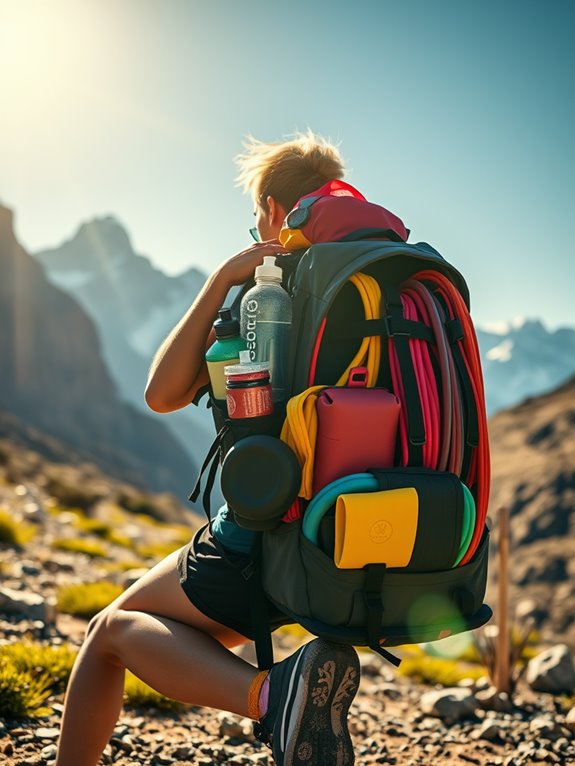
To guarantee a comfortable and safe experience, it's crucial to load your backpack correctly.
Start by placing heavier items closest to your back to maintain balance and minimize strain. Distribute weight evenly across the backpack to avoid pulling you to one side. Use smaller, lighter items to fill gaps and prevent movement during your workout. Secure everything tightly to reduce shifting, which can lead to discomfort.
Always adjust the straps for a snug fit; your backpack should sit high on your back, not sagging down. Finally, don't overload it—stick to a weight that feels manageable.
Incorporating Cardio Into Your Backpack Workouts
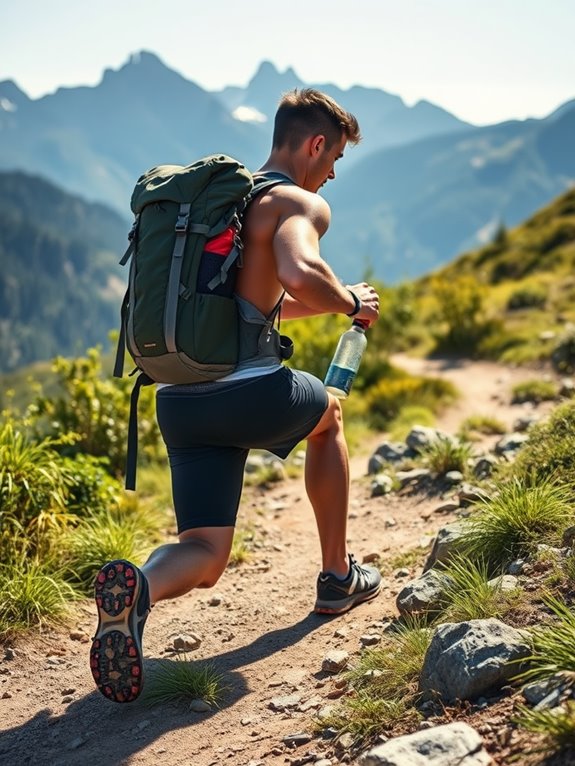
While you might think of backpack workouts as purely strength training, adding cardio can elevate your fitness routine considerably.
Here are three effective ways to incorporate cardio into your backpack workouts:
- Hiking with a Loaded Backpack: Choose a trail and hike with your loaded backpack. The incline and varied terrain will boost your heart rate and endurance.
- Backpack Sprints: Find an open space, load your backpack, and perform short sprints. Alternate between sprinting and walking to maximize cardio benefits.
- Jump Rope Intervals: Use a lightweight rope, and do jump rope intervals while wearing your backpack. This adds resistance and challenges your coordination.
Staying Motivated and Tracking Your Progress
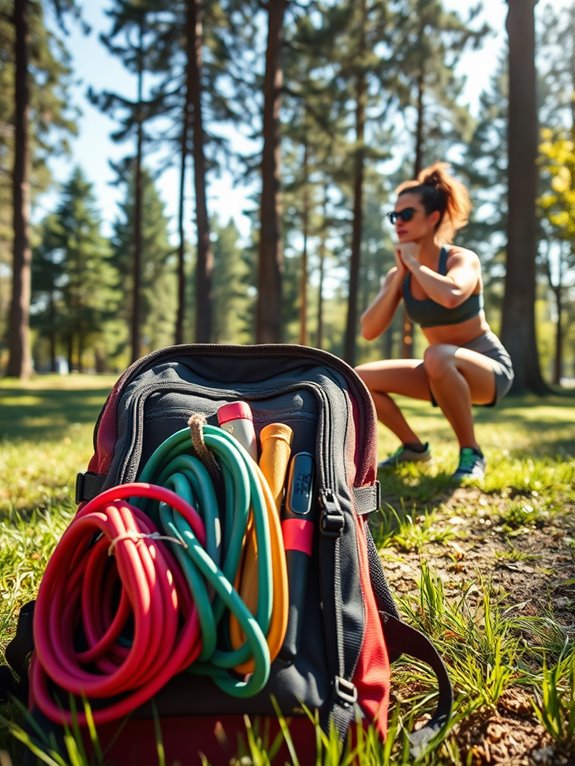
After adding cardio to your backpack workouts, staying motivated becomes key to achieving your fitness goals. To keep your spirits high, set clear, achievable milestones. Track your progress using a simple table to visualize your workout journey. Here's a way to organize your efforts:
| Week | Workouts Completed | Distance Covered (miles) |
|---|---|---|
| 1 | 3 | 5 |
| 2 | 4 | 8 |
| 3 | 4 | 10 |
| 4 | 5 | 12 |
Celebrate your achievements, no matter how small, and consider sharing them with a workout buddy. This accountability can boost your motivation and help you stay focused on your fitness journey.
Frequently Asked Questions
Can I Use a Regular Backpack for Workouts?
Yes, you can use a regular backpack for workouts. Just fill it with weight, like books or water bottles, and you'll create resistance for exercises. It's a convenient way to enhance your training on the go.
How Heavy Should My Backpack Be for Workouts?
Your backpack should typically weigh between 10-20% of your body weight for effective workouts. Start light, then gradually increase weight as you build strength and endurance. Listen to your body to avoid injury.
Is It Safe to Workout With a Loaded Backpack Daily?
It's generally safe to workout with a loaded backpack daily, but listen to your body. If you feel discomfort or fatigue, adjust the weight or frequency. Balance and proper form are key to avoiding injuries.
What Types of Exercises Can I Do With a Lightweight Backpack?
You can perform squats, lunges, push-ups, and planks with a lightweight backpack. It adds slight resistance, helping improve strength and endurance. Just make certain it's secure and comfortable while you exercise for ideal results.
Are Backpack Workouts Suitable for Beginners?
Yes, backpack workouts are suitable for beginners. You can start with light weights and simple exercises, gradually increasing intensity as you gain strength and confidence. They're a versatile way to enhance your fitness journey.
Conclusion
Incorporating backpack workouts into your routine transforms your ordinary gear into a powerful tool for fitness. Just like a sculptor chisels away at stone to reveal a masterpiece, you can shape your body and boost your health with each rep. Embrace the journey, and let every step be a reflection of your commitment. With the right mindset and creativity, you're not just carrying a backpack—you're carrying your aspirations and dreams toward a stronger, healthier you.